
I Don’t Want to Escape My Life. I Want to Build a Better One.
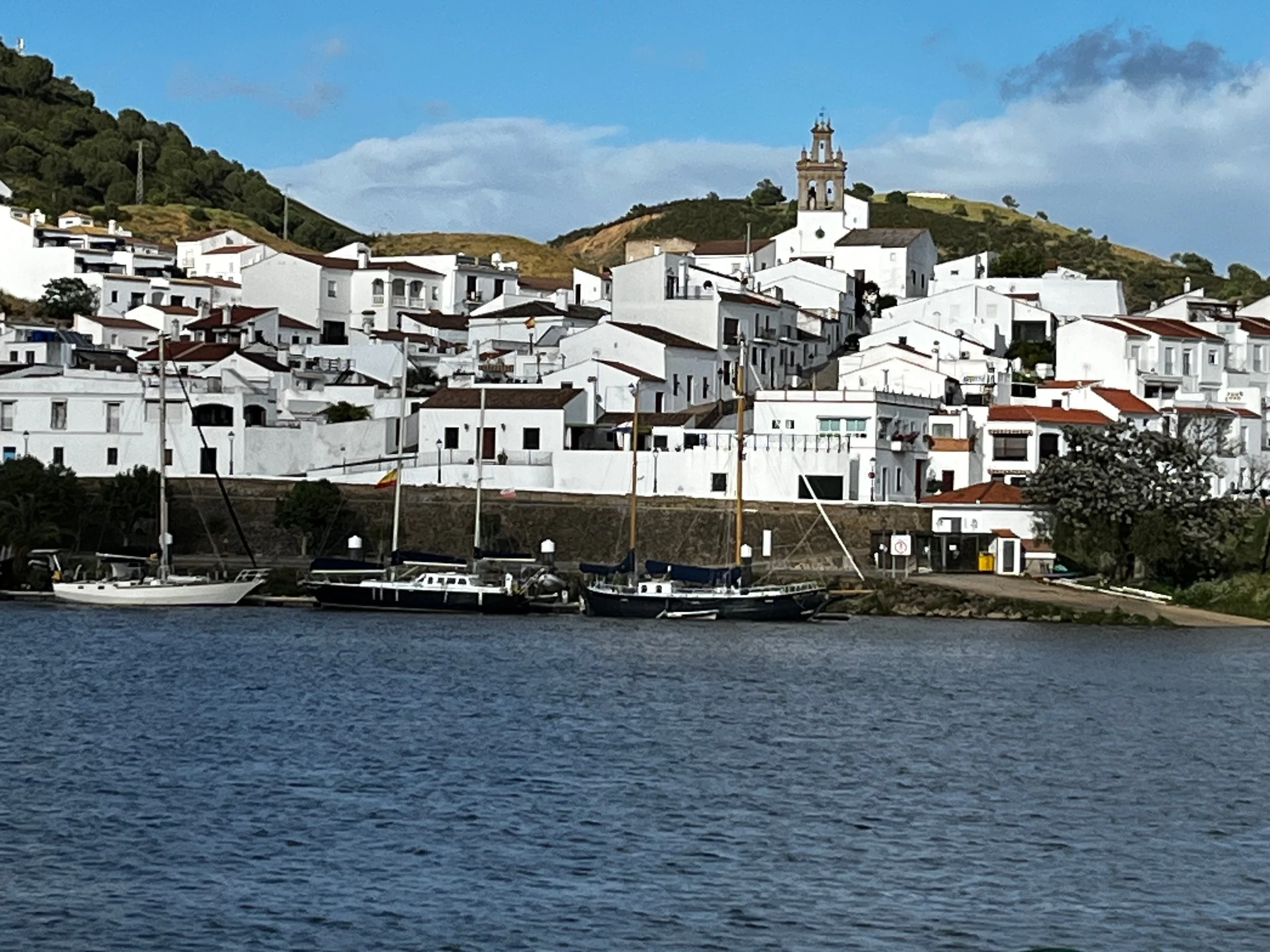
White village and the castle, Sanlucar, Spain. Photo by Wendy Stieg
The Difference Between Escaping and Rebuilding
Many years ago, I was living in Hawaii. I vividly remember a conversation I had with an acquaintance. For now, let’s just call him Bob. Bob and I did not have a lot in common. He came from wealth; I came from Boulder. He was a longtime surfer, and I was a skier. But we both went to Chaminade together, and occasionally I would edge into philosophical conversations with him. One was my theory that sometimes life can just be hard, and he completely disagreed. I found it striking for someone to say that life wasn’t hard, but when I looked at his situation more closely, it was true from his perspective. Life wasn’t hard. I don't think he had ever held a job, and he lived on his mother’s vast property in the Black Point area just outside of Diamond Head on Oahu. No, for Bob, life was not hard. Yet. I think everyone reaches the point when they come to realize that life is, in fact, hard.
Neither Paul nor I had that experience. We did not grow up in Hawaii, living in one of the wealthiest parts of our country. Paul did go to a private Catholic school in St. Louis, Missouri. I grew up in Boulder, Colorado, but went to public schools my whole life. Bob went to Punahou, another private school in Hawaii. Also quite exclusive. Paul and I have certainly had our share of money struggles, but eventually you realize life’s hardest moments are not always financial. Yes, Bob, life is hard. Which is why, for someone like me, who is prone to serious daydreaming, escape is a powerful lure.
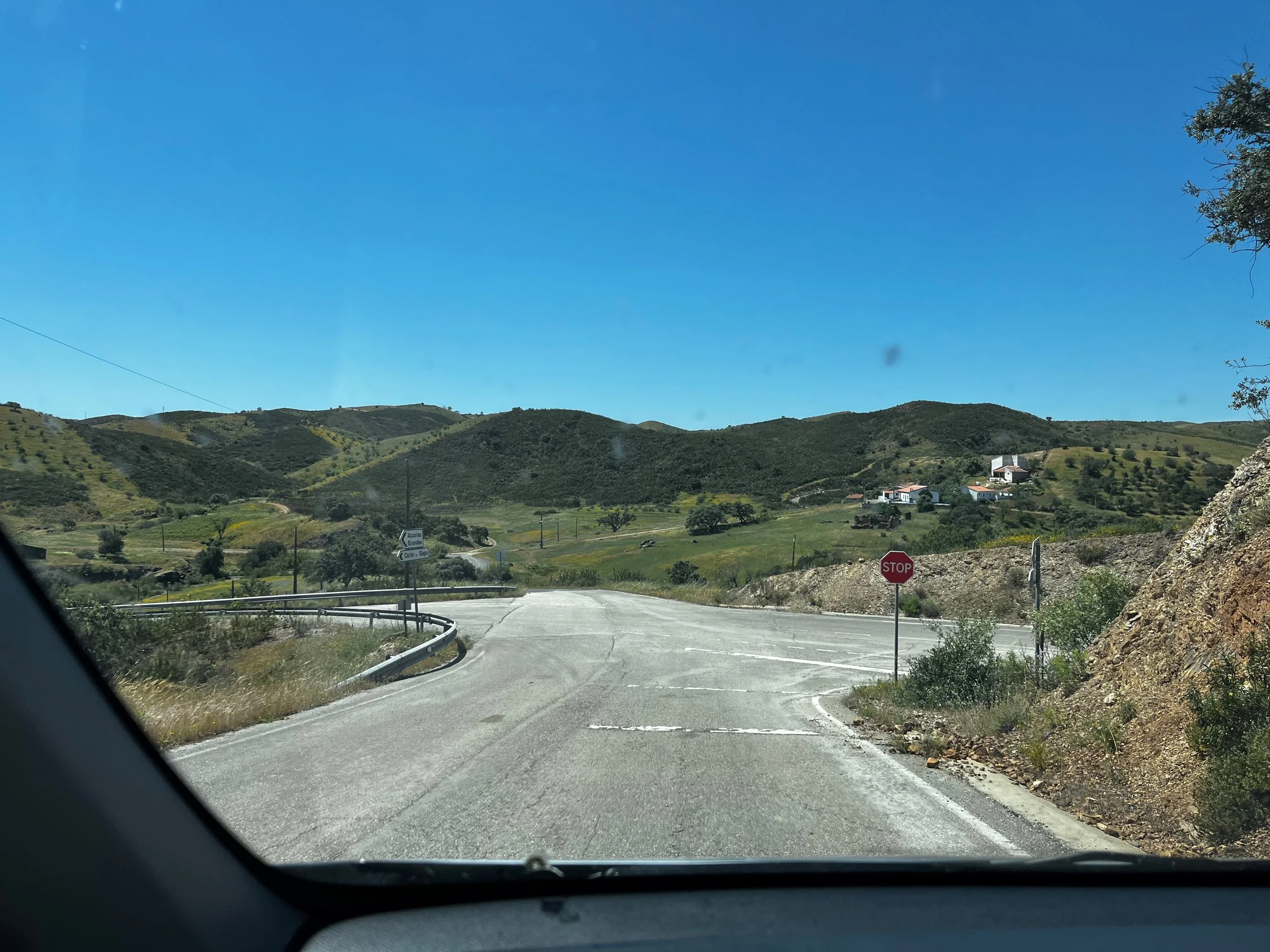
Algarve crossroads. Photo by Wendy Stieg
I am sure I am not alone in fantasizing about a better life. The idea of escape tends to show up whenever I run headfirst into hardship or serious struggle. And why wouldn’t it? I suspect it is my brain’s way of saying, “You don’t have to keep doing this, ya know!” while also protecting me a little from reality. I am a consummate fantasizer. I have a vivid imagination filled with beauty, adventure, reinvention, and escape. There are stories constantly swirling around in my head that I have yet to articulate. And still, whenever life becomes especially hard, I go full fantasy mode.
I also hate friction, barriers, things that get in my way, and things I have to do over again. So put that together with full fantasy mode, and sometimes, when life gets hard, I imagine myself running away. Or getting complete amnesia. Is that even real? For me, it would not matter at all because I could get amnesia and then end up working at a diner in Scottsdale. Or on a yacht in the Mediterranean. You see where my brain goes. But is there another way?
Fantasizing shows up as quitting, disappearing, retiring, moving abroad, and running away from stress. It is understandable. We have a powerful survival mechanism built in called Fight or Flight, and escape is a strong part of that. But we also have a more powerful part of our brain; we just have to activate it. We have the ability to think outside of our current experience and think our way through challenges. You have to find a way to organize it so that you can slow down, let go of what you have no control over, and try to see alternatives that could help you both short-term and long-term. This is where reinvention comes in. You can tap into your own creativity, allow the fantasy to flow, and figure out what you truly want, as well as need, to get through any challenge. Sometimes you get hijacked by emotions, but even that is a part of the creative process. One thing many people don’t realize is that we are all creative; we have just been sold on ideas that snuff it out. Stop doing that to yourself; allow the fantasies to come out. You will see it in your dreams, and your body will tell you when things are either dreadfully wrong or oh so right.
Maybe that is the real difference between escaping and rebuilding. Escaping asks how to get away from your life. Rebuilding asks why your life is no longer working the way it should. It requires allowing yourself the space to feel, to acknowledge what is not working, and to let creativity guide you toward what might work better. There is a difference between wanting to escape your life and wanting to take what you have and rebuild it.
I Played by the Rules
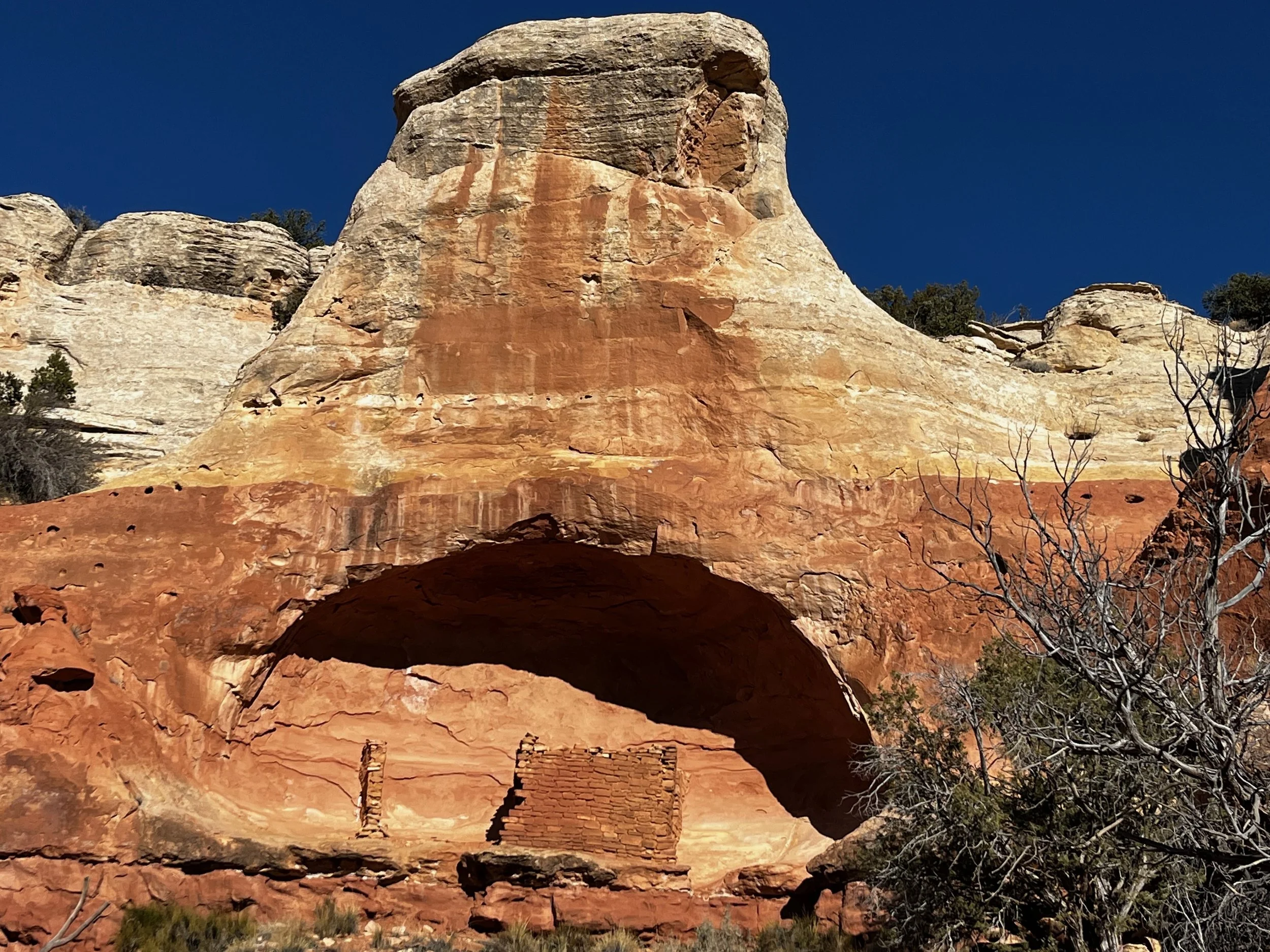
Ancient pueblo, Cortez, CO. Photo by Wendy Stieg
Let’s talk about generations. There are the Boomers, and many people want to lump me in with them, but they are people who grew up post-war and were the first to push the establishment in modern times. They came before me. Then there is Gen X. I have some shades of that, but again, not quite. I think of “Friends” when I think about Gen X. They are just a tad younger than me. I finally figured it out, I belong to Generation Jones: the group raised on the promise that if we worked hard and played by the rules, stability and the American Dream would follow. “Better get out and hustle,” was my Dad’s anthem. It was also the answer to any problem you might have been having. That, and refusing to step up and help you out, he came from the “Pulled myself up from my bootstraps” generation. Everything else was whining, in his view.
I raised two children largely by myself. I held multiple jobs simultaneously while raising said children. I went back to school and got a master’s degree while raising said children. I found myself constantly adapting, constantly working, constantly fighting my way upstream. As a woman, I was supposed to be “nice.” Whenever I slipped up and failed at something, I was told I was being irresponsible. I survived a lot. And the good old American Dream? What’s that? All I know is that I DID work hard enough, I was a good enough mother, and I did manage to also play hard. But let’s not sugarcoat this: what I somehow accomplished was short of impossible. But the hardest reckoning of all is that when Paul and I, and he struggled and fought his way as well, look at where we ended up, we still don’t have enough to retire. The ground has shifted, and so have the goalposts. The game has changed, and no one really said that was happening. So here we sit, trying to figure out how we move from here to eventual retirement. And is that even possible?
So my question is this: why would I pretend this is easy? That I like it? That it makes me happy? Yes, I am a positive and generally happy person, but having worked hard my whole life, with not a lot left for retirement, does not make me happy.
The Endless Demand for More
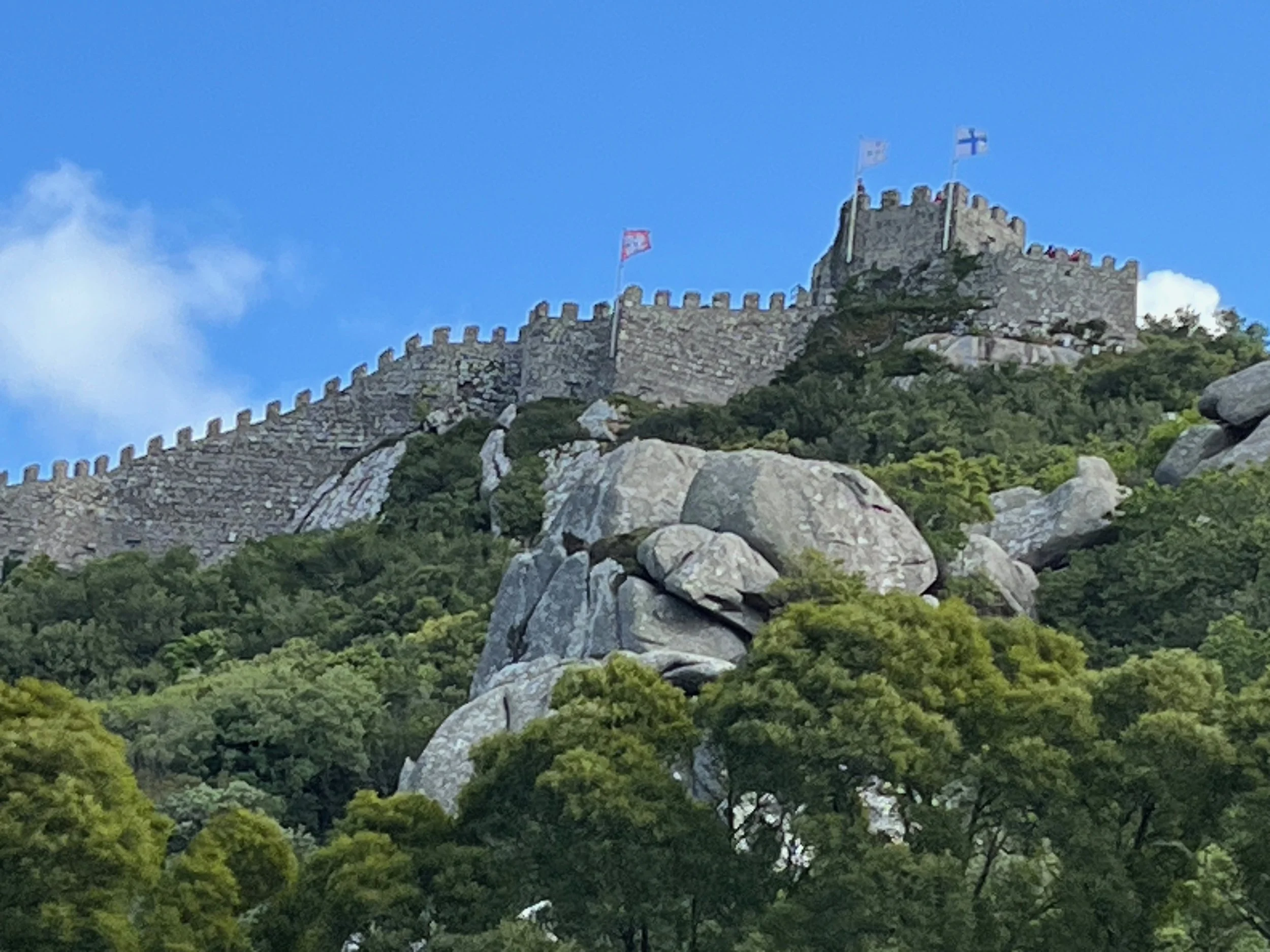
Castel dos Mouros. Photo by Wendy Stieg
But whose rules are they anyway? History is full of women who ignored the rules. But there is a line there. I don’t suggest running around breaking all the rules and laws, but questioning the status quo is a great place to start. In this vein, whose rules are they anyway? Let’s look at the “rules” for a minute. The rules that say you have to hustle harder, work harder, constantly obsess about productivity, and be perpetually “ON.” Who started that? I think part of it goes back to the United States being a place where we revere work. We were TAUGHT to do that.
I have never said not to work hard, but when you look at jobs like teacher, nurse, or office manager, none of those ever allow you to spike the ball, make the touchdown, and feel like you won the game. Once you do the impossible, another impossible request lands on your desk. This creates unstable expectations, constantly moving goalposts, and the inevitable exhaustion of never really completing anything. This is survival pressure heaped upon us by people who were already carrying too much work themselves. Eventually, I started questioning the “work harder” mantra, and then there’s the “Work Smarter Not Harder…” Umkay, who exactly is going to allow that? It’s a lovely little catchphrase. But what about living better? When does all that slogging, sweating, and teeth grinding finally pay off?
Stability Might Be an Inside Job
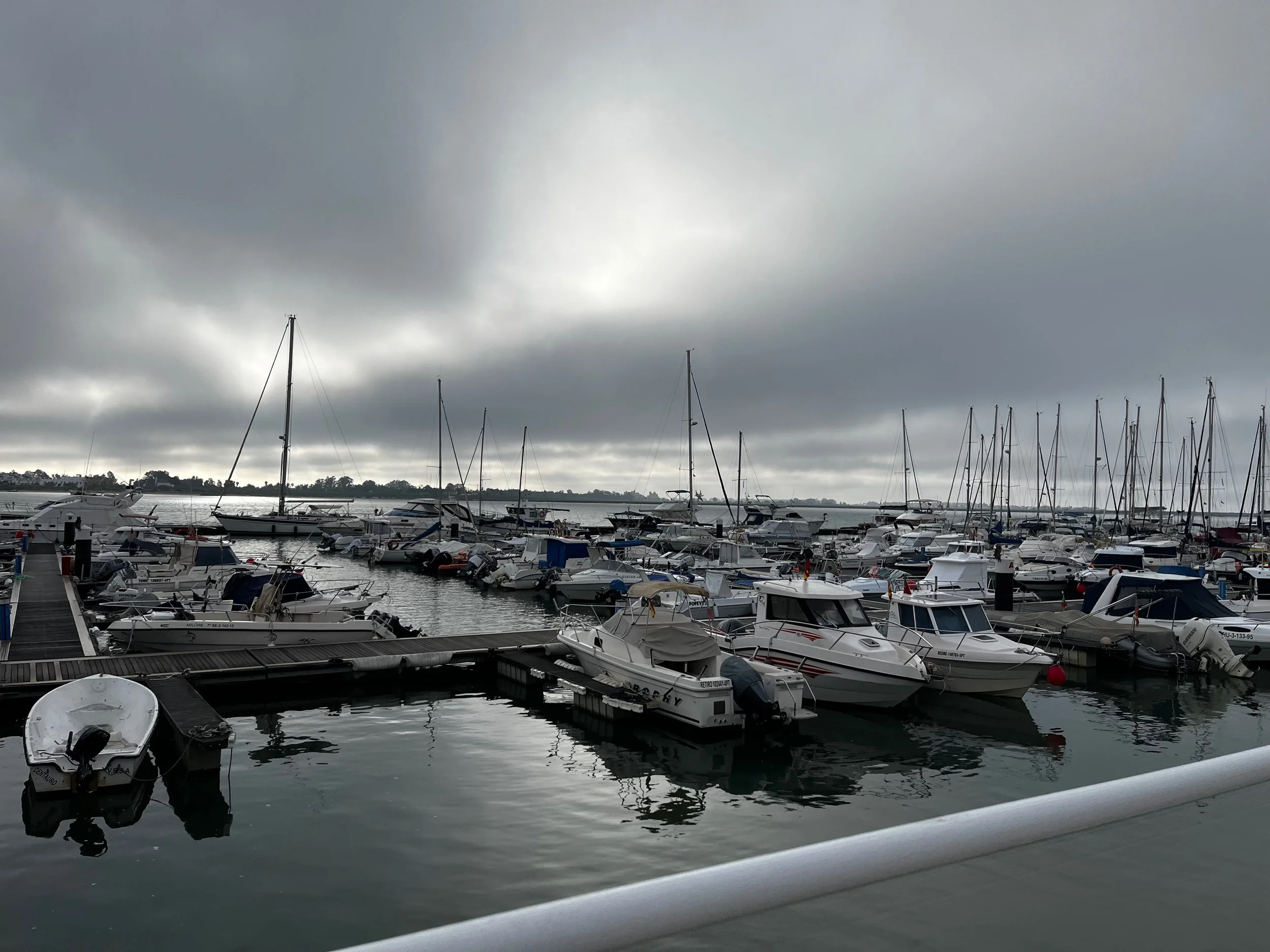
Gray Algarve day. Photo by Wendy Stieg
Life requires grit, perseverance, and all-out strength sometimes. Life is also inherently uncertain. The only constant is change. People change. Jobs change. Health changes. Economies change. People age. Plans fail. Systems shift. Grief happens. Understandably, most of us crave certainty, stability, and security. But don’t forget that it is often the most challenging times that forge our strength and resolve.
I remember being on a chairlift once with a little kid from the ski team I was coaching. We were using an older, lesser-used chairlift with a center pole, which was always a terrible design. I asked the lift operator to slow the chair down for this small child who could ski but needed help getting on safely. The lift operator was annoyed that I asked. Instead of slowing the chair, he decided to prove a point. The chair came around too fast, caught the child off guard, and suddenly, we were fifteen feet off the ground. He slipped. My arm was wrapped around the center pole, and in my gloved hand was his jacket. The only thing between him and the ground was my barely hanging-on grip. I still cringe thinking about how close he came to serious injury. In that moment, I knew I had to find the strength to hold on, despite the awkward angle and the center pole cutting off half my leverage. He didn’t fall. Afterwards, I absolutely gave the lift operator a piece of my mind and found his boss. We never saw that lift operator again.
So where did that strength come from? It came from my absolute refusal to allow a child to be hurt because another adult wanted to prove a point. My resolve, however, was definitely an inside job. That day was a tiny example of what we do when we HAVE to do something. It also proved my point. Stability is an inside job.
So what sustains us when we are mired in chaos, filled with uncertainty, and find ourselves in the mud? I think it’s adaptability, resilience, curiosity, creativity, humor, and perspective. I think you can find solace in any of those, so you can land on all fours, as if a cat caught falling off a tree limb.
When the Old Rules Stop Working
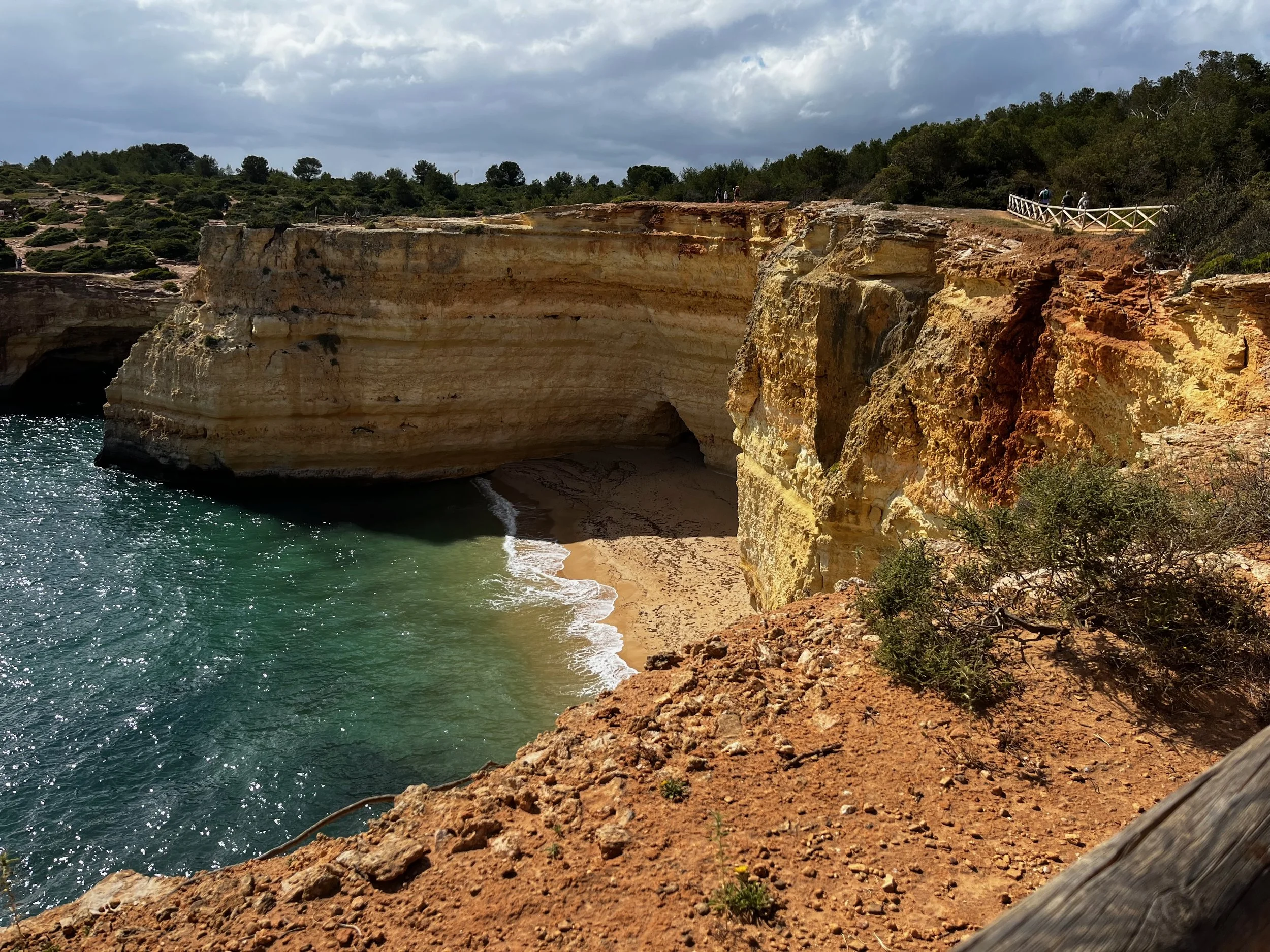
Algarve Cliffs. Photo by Wendy Stieg
I think you start dealing with this realization by choosing joy anyway. That, and allowing yourself to admit to what you want in your life. Maybe that is where I finally landed. I don’t want to escape my life, I want to rebuild it. I want a life with more room for creativity, curiosity, beauty, conversation, travel, rest, laughter, meaningful work, and the people and animals I love. Fear, uncertainty, and struggle will always exist, but I do not want them to become the organizing principles of my life. I have spent enough years surviving, adapting, grinding, caregiving, and pushing through. At some point, you start to realize that wanting a softer, richer, more intentional life is not laziness, irresponsibility, or avoidance. It is a deeply human response to living through hard things and deciding you still want to fully live anyway. And I have a feeling far more people are standing at this exact crossroads than we openly admit. This raises questions. Can we find ways to continue living that don’t involve stopping living because of some arbitrary age limit? How can we leverage what we have and still fully live our lives? How do we make sure we have enough to ease into our golden years? That’s what we are working on, because at this point, that is the only way to land this plane.
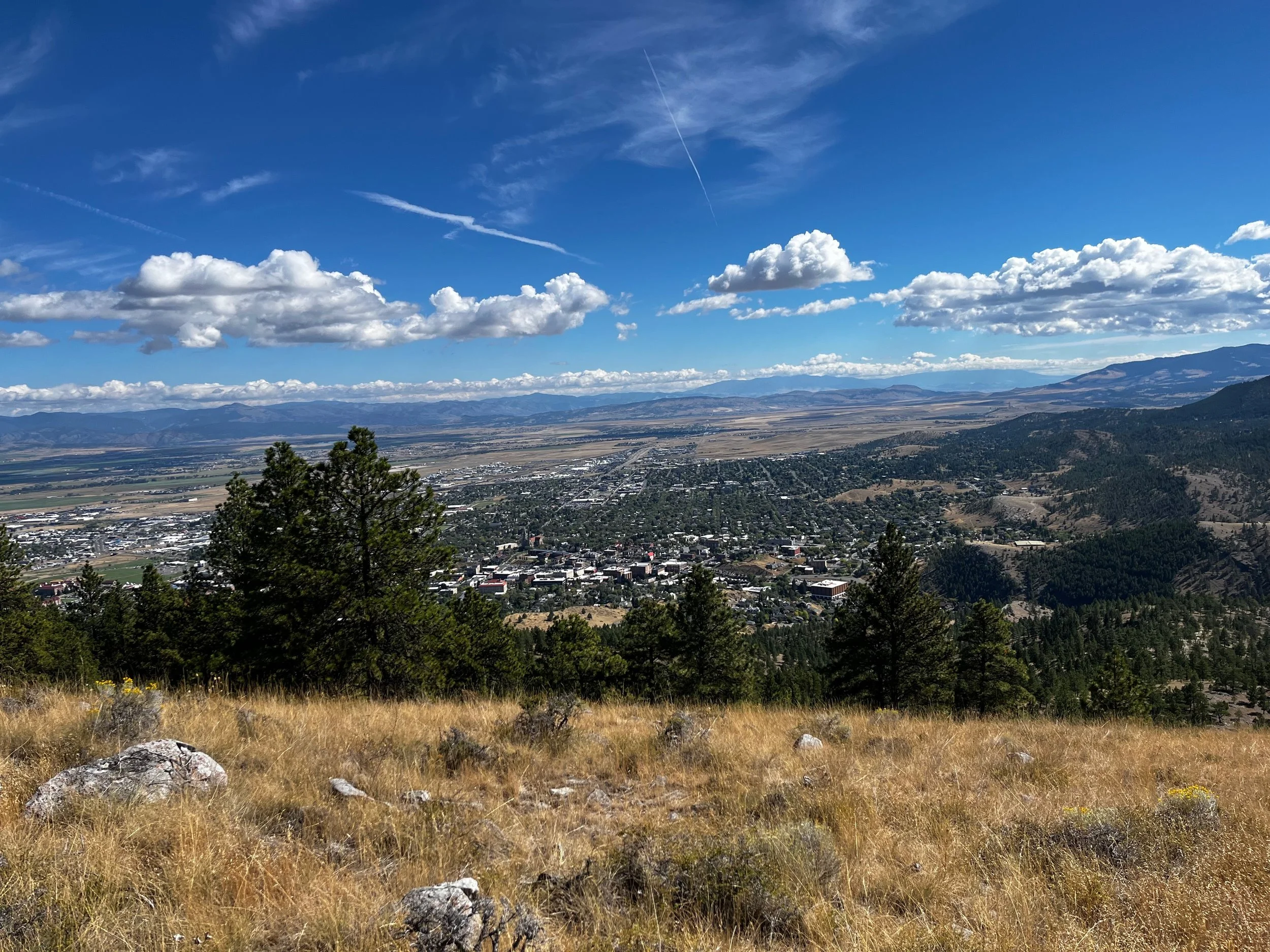
Helena, MT , a Day for Reflection. Photo by Wendy Stieg
