
May the road rise up to meet you, may the wind be always at your back. —Traditional Irish Blessing
March Blueprint

Road to Telluride, CO. Photo by Wendy Stieg
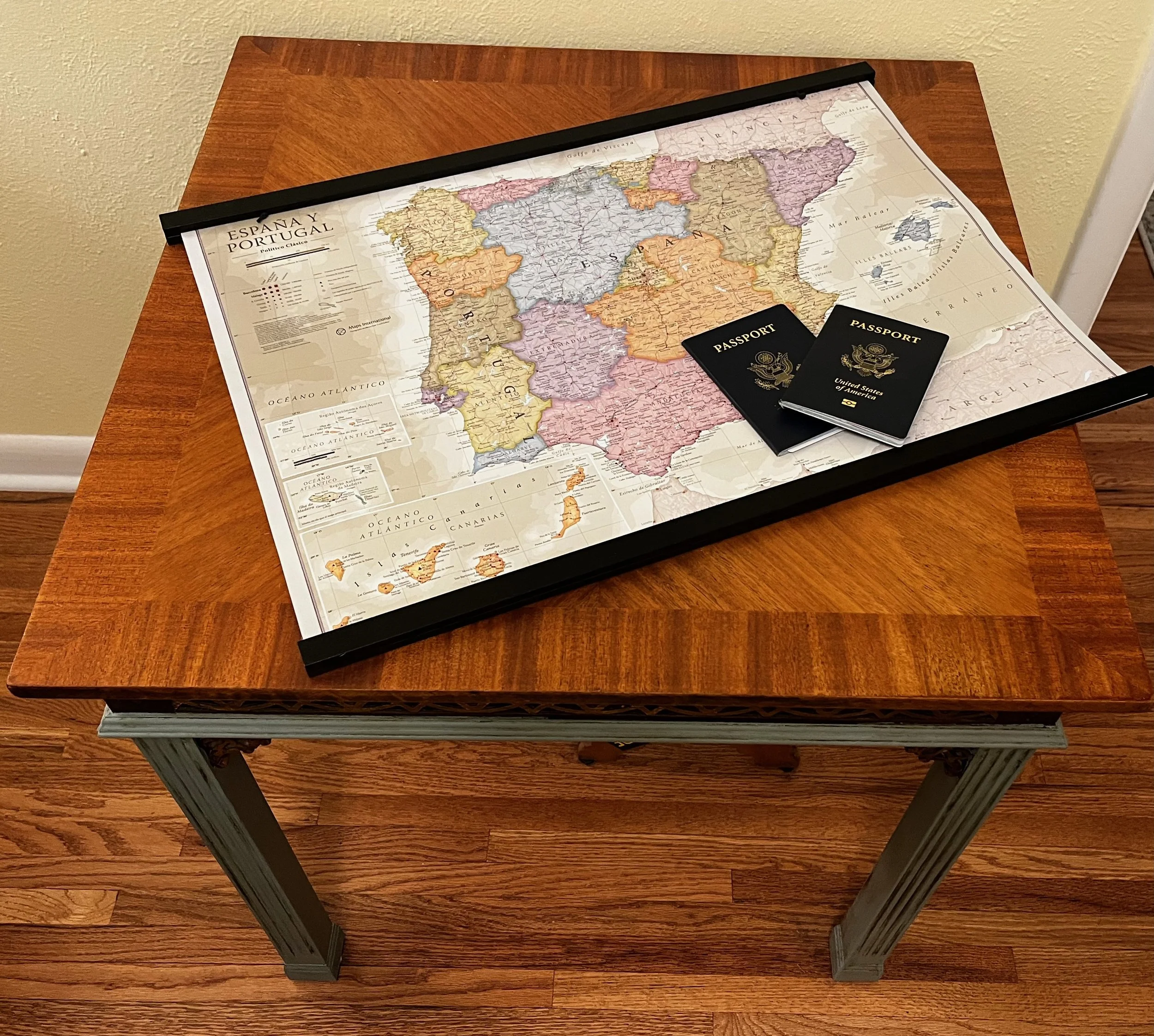
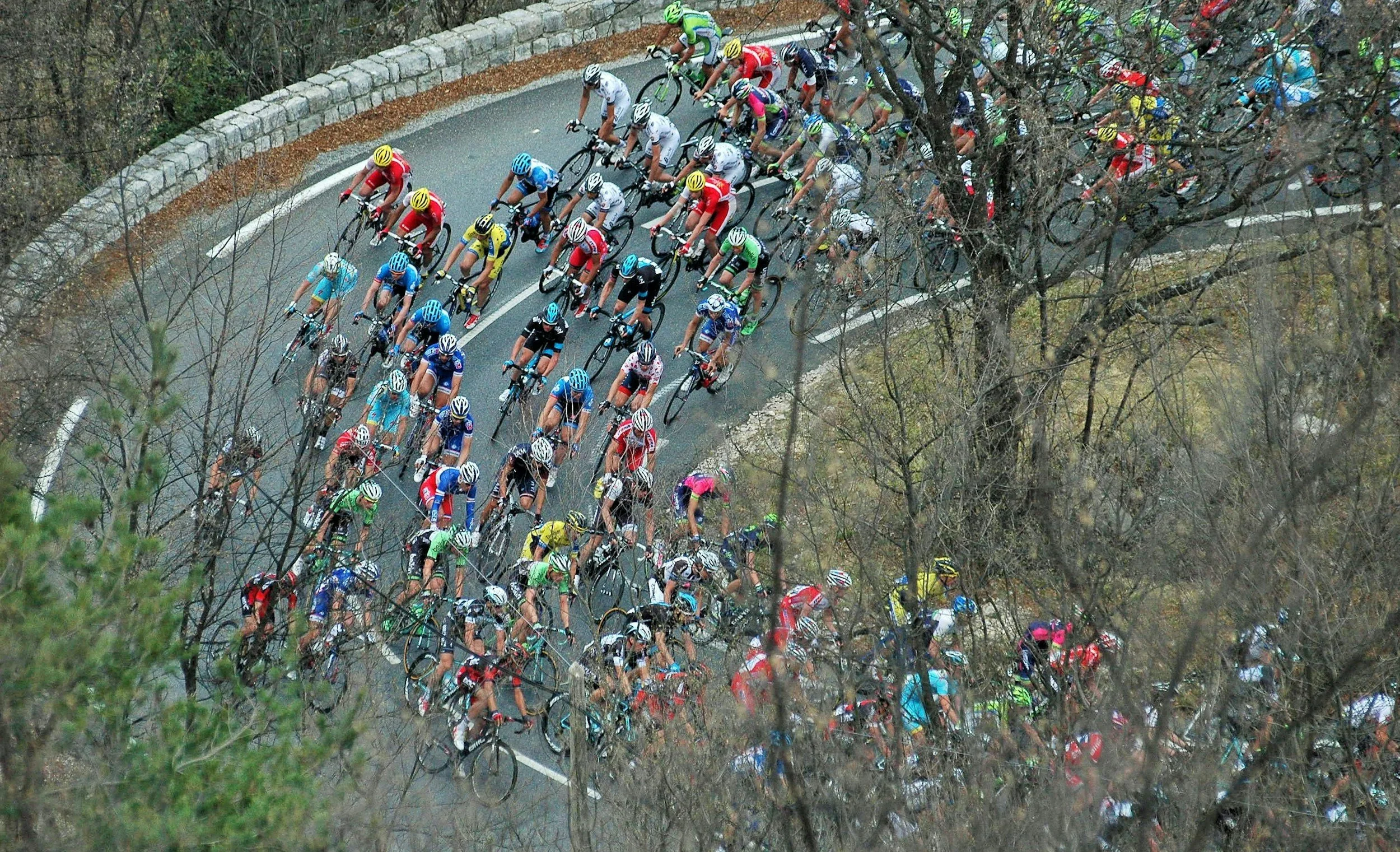
La Vuelta Cycling Race, Photo by Suzanne Ruggles

The Turn Toward: Transition from Inspiration to Blueprint
We have a fantastic idea for our next journey. We have already spent time in Portugal, and now we want to explore the rest of the Iberian Peninsula. Post-redirect, I am not ready to book anything, but I am loving looking at maps, flights, even La Vuelta and the route it takes through Spain. If you know us, you know we love sports, and Paul is especially excited about European bike racing. A lifelong dream of his is to see the three grand tours: Le Tour de France, La Vuelta, and the Giro d’Italia. Watching the route for La Vuelta wind its way across Spain has a way of pulling us back into the map. I feel as though I am tracing lines and beginning to notice what resurfaces. Something is coalescing.
This question actually began earlier in March’s Muse, where I started thinking about how inspiration appears before a plan ever forms.
The First Sign is Attention
This is the stage where the idea begins to gather momentum. Attention without containment turns into overwhelm. The friction feels familiar: multiple open tabs across my browser, or in my case, browsers. Sticky notes everywhere. Race schedules. Maps. Fragments of thought. Big ideas without structure. This is the point when I get excited and try to explain to other people how excited I am. It is also the point when they feel the need to tell me to “slow the roll” or “think realistically.” No. I am not doing either of those things. I am done announcing that I am in the brainstorming phase and allowing myself to think without restraint. That is not my responsibility to explain.
It is the I Love Lucy moment. Lucy gets an idea. Ricky immediately starts worrying about what kind of trouble this is going to cause. That is the turn. Instead of shrinking the idea, I allow myself this delicious point in the planning process and sit inside the excitement. I love the Buddhist idea of sitting with an emotion and not rushing through it. Let it teach you what it needs to teach. For me, that lesson is always the same. At some point the friction shifts from resistance to logistics: where do I put all of these ideas? Where do they live? That is when I know it is time for containment. It is my process, and not everyone understands it. But effective planning requires two kinds of thinking: big picture and details. You need both. Attention without containment turns into overwhelm unless you capture it and give it structure. This is creativity in real time, in real life. That stall, that feeling of not knowing how to move forward, often comes from not having a place for ideas to land.
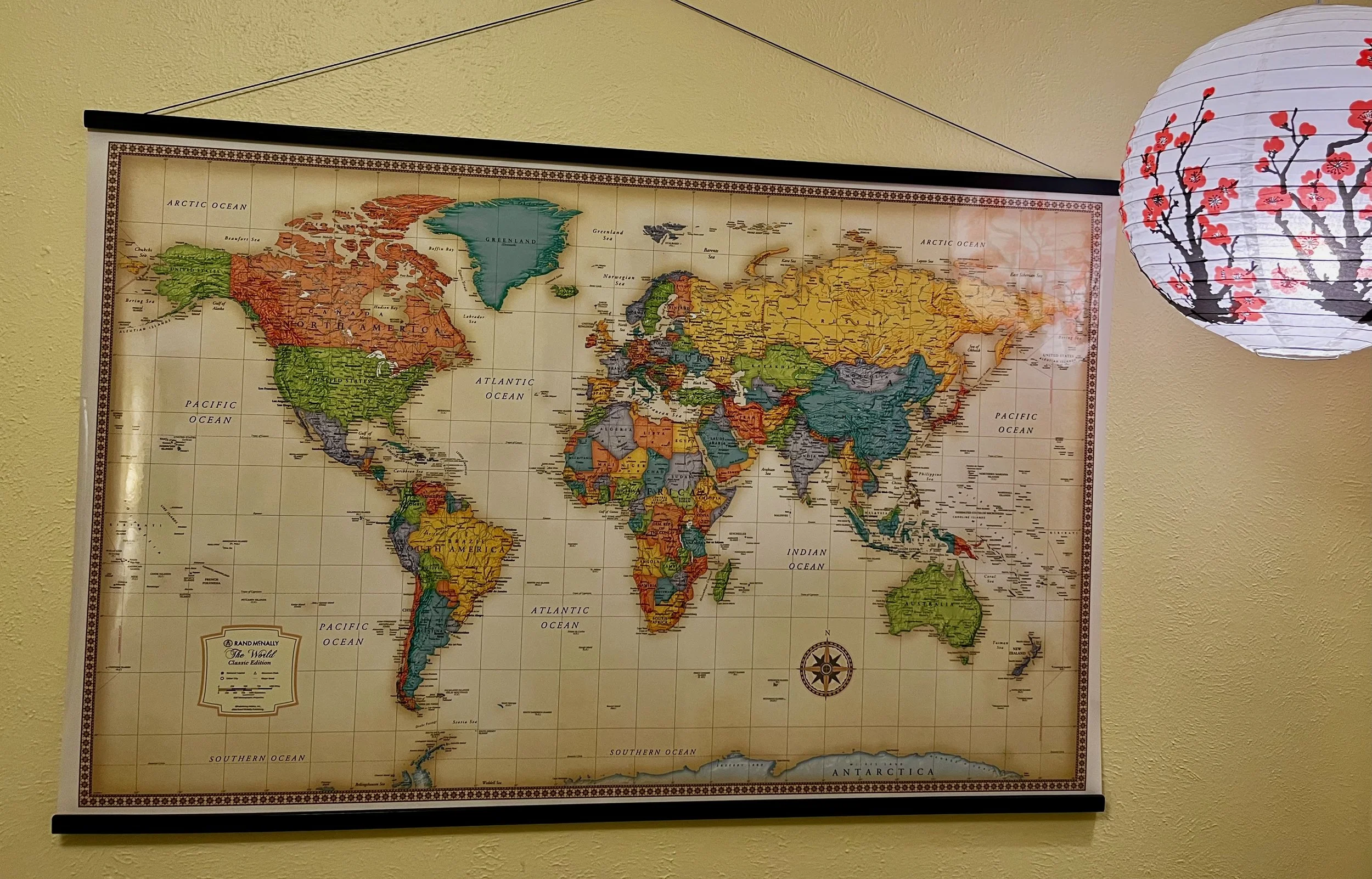
Tracing the Iberian Peninsula. Photo by Wendy Stieg
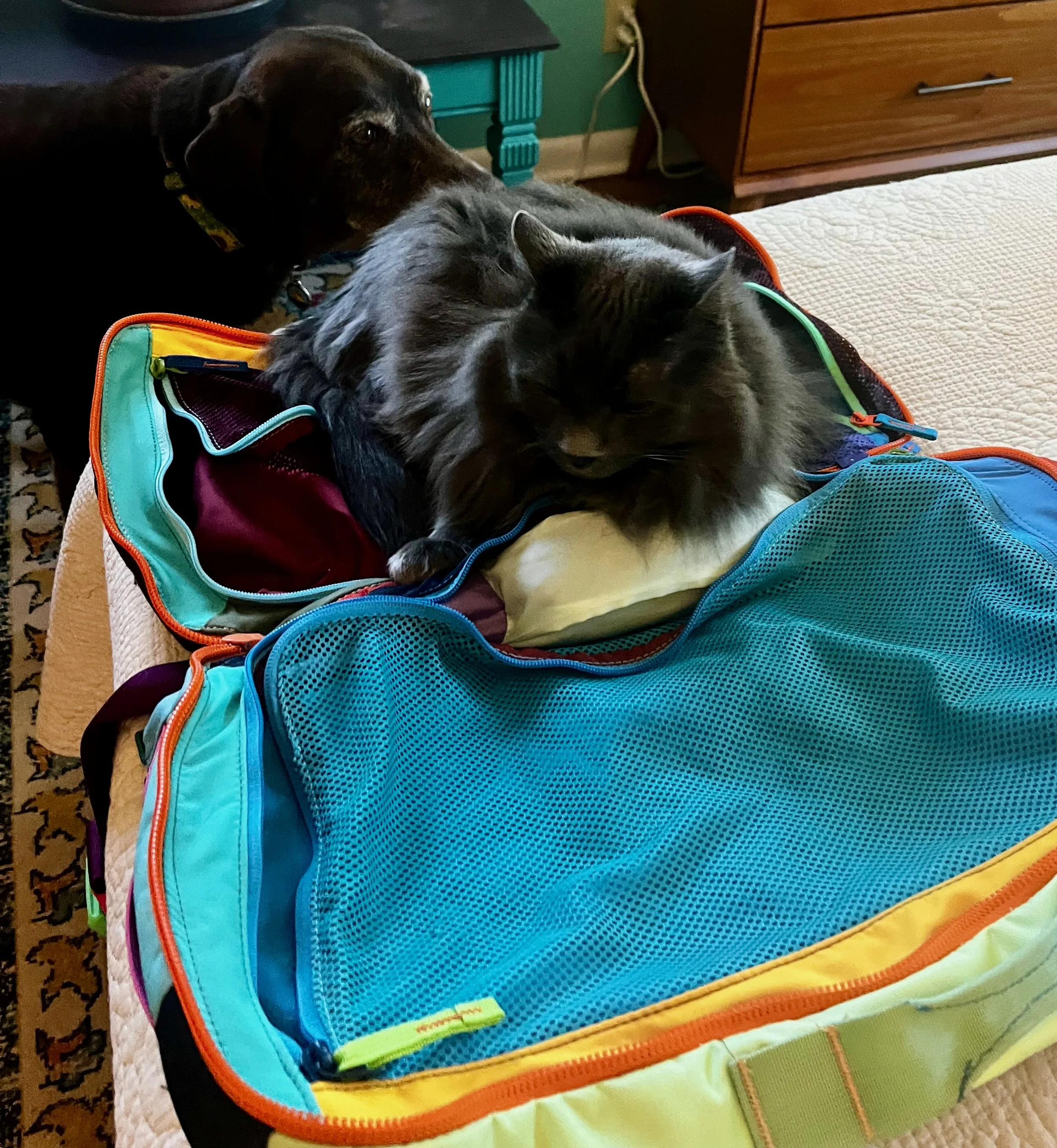
Some members of the household are not thrilled about travel planning. Photo by Wendy Stieg
The Second Sign Is Containment
The second sign of a new plan emerging is containment. Containment is not control or rigidity, and it certainly isn’t having everything booked or locking in dates before you are ready. It is something much simpler and much more foundational: a page, a draft, a place to capture your thinking. It is a surface where the idea can land before it becomes fixed. Personally, I do not love minutiae. I love trajectory. I tend to think in generalizations, and I am deeply goal-oriented, naturally drawn toward completion. I often see the whole picture before I even begin, which means I plan at the macro level, not the micro. But I am learning that you need both. Without somewhere to hold the macro, it evaporates. Big-picture thinking without a container turns into scattered tabs and floating ideas. Vision without structure loses momentum. As I begin conceptualizing this newest trip idea, I can feel that friction. The direction is clear, but it needs a better place to live. Not just dates and prices, not just logistics, but a planner that allows for both the wide arc and the smaller anchors. I'll create one that holds both, not to control the outcome or force the timeline, but to preserve the direction while it forms. Containment is not about narrowing possibilities; it is about giving possibility somewhere to stay long enough to become real.
Paint-by-Number, or a Blank Canvas?
I love comparing movies and novels to life. Does art imitate life, or is it life itself? It’s one of my favorite questions, and it often brings me back to something I think about when designing anything in my life: do we love the process, or the result? I touched on this briefly in November’s Blueprint, but it has become a strong metaphor for how I approach creating the life I want. Whether I’m designing spaces in my home, writing, or planning travel, the beginning always looks the same. I find an idea, allow myself to swirl in the messy middle for a while, and slowly let the idea develop. That time allows me to figure out what I actually want, trust my instincts, and invite curiosity into the process.
This idea reminded me of a Northern Exposure episode I mentioned earlier, in November’s Blueprint: Northern Exposure, “Fish Story,” Season 5, Episode 18 (March 14, 1994). In the episode, Holling becomes fascinated with paint-by-number paintings because he loves the certainty of them. Follow the numbers, fill in the colors, and a finished picture appears. Chris Stevens, the town’s philosophical radio DJ, gently challenges the idea, asking whether the point of art is the finished painting or the experience of creating something of your own. Travel works much the same way. Templates, itineraries, guidebooks, and blog posts can show us the picture before we begin, and there is nothing wrong with that. Most of us need that first framework to start. But eventually, the trip has to become your own painting. At some point, you step outside the grid and begin following the places that pull at you, the towns that linger in your imagination, and the experiences that feel personal rather than prescribed. Structure can help an idea form, but the most meaningful travel happens when curiosity eventually takes the brush.
If you are still at the stage where the idea itself is just beginning to form, you might also enjoy How to Plan a Trip When You Don’t Know Where to Start, where I explore the earliest steps of turning curiosity into the beginning of a real journey.
The world is waiting to be explored. Photo by Wendy Stieg
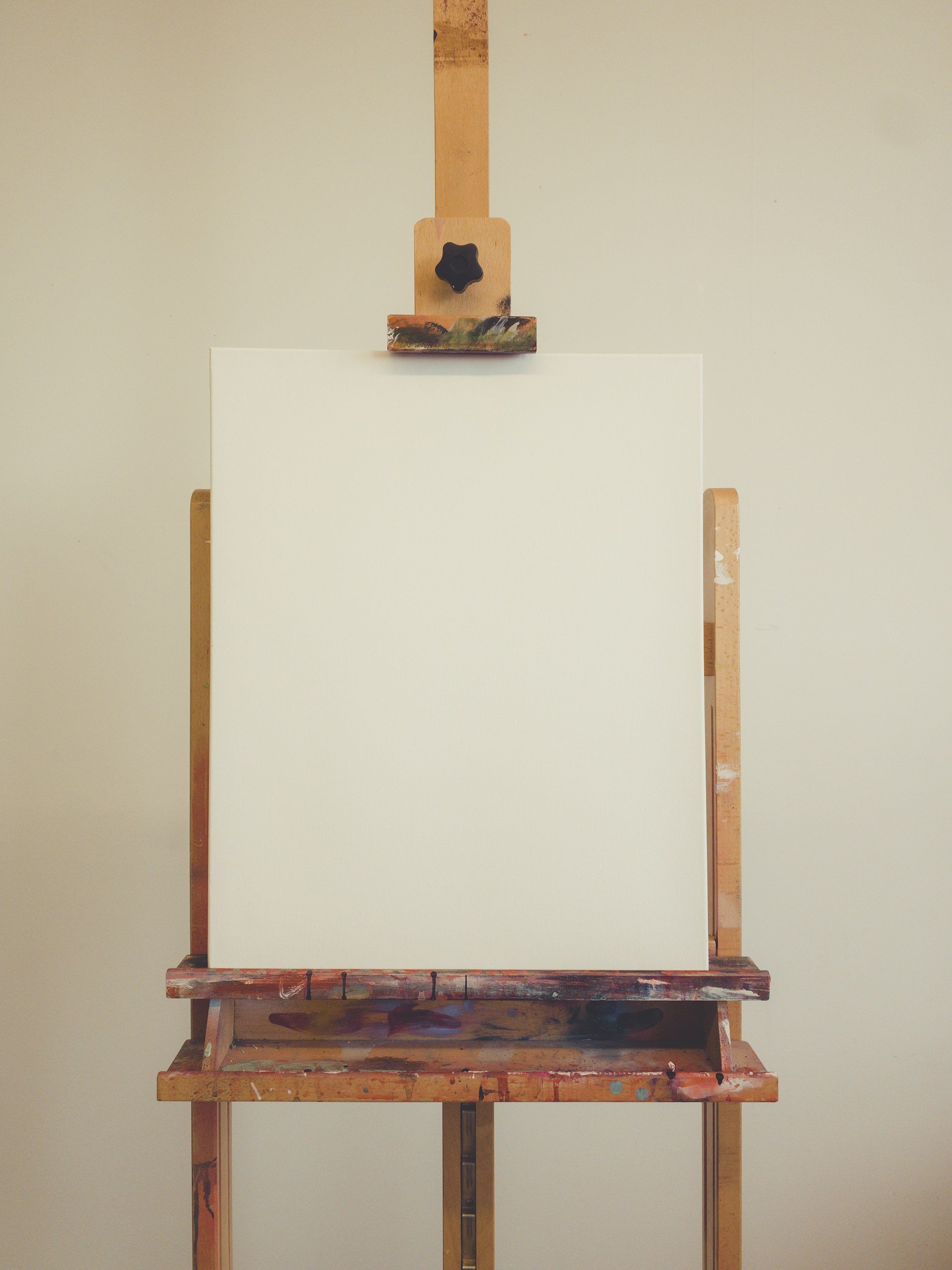
A blank canvas invites possibility.
The Four Stages of Bringing an Idea to Life
I have found that there are four stages that happen as we bring our ideas to life. This is not a template, but rather an observation of how people tend to move from dream to reality.
The first is attention. Something piques your curiosity.
The next is dreaming. You begin to explore possibilities. As your ideas start to take shape, you feel that slight urge to write things down, capture the information you are discovering, and find a place to store your ideas so you do not forget them.
As you take notes, fill out a planner, or even make voice recordings, you give the idea somewhere to live. As you do this, the idea begins to take shape.
Booking is not the moment a dream becomes real.
The dream becomes real when it has a place to live. That is the Blueprint stage. This is where your planner concept naturally begins to emerge.
The Idea is Real, and it is Off and Running
One of the things I have noticed about travel planning is that there are emotional highs and lows throughout the process. Every single trip I have ever planned, from simple neighbor island getaways back when I lived in Hawaii to trips across Europe, has included joyful, creative moments while we are planning, booking, and structuring the trip. But there are also moments filled with doubt. Things come up in life that make you question whether you can really go. There is one thing that makes a huge difference in whether the trip will happen or not, and that is your decision. Are you going to do this? If the answer is yes, then you have to shift your mindset, or you will give up too easily. Every single trip that was ever planned, no matter who you are or how much money you have, faces the possibility of cancellation. It is you who decides whether you will go or not. I say this all the time. People do not fail. Plans fail. Sometimes you simply discover a flaw in the plan. But the decision is still there. Decide you are going, keep moving forward, do not give up, and the trip will happen.
In the end, planning a trip is rarely a straight line. It moves through excitement, doubt, curiosity, and structure. Ideas appear, then scatter, and eventually they need somewhere to land. Attention begins the process. Containment gives the idea a place to live. Once those two things exist, something important has already begun. The trip may still be months away, but the direction is already there, quietly forming.

Road to Rico, CO at Dusk. Photo by Wendy Stieg
Desperation is a necessary ingredient to learning anything, or creating anything. Period.
—Jim Carey
February’s Blueprint
How Adaptive Planning Turns Out to Be Just Right
Experiences Shape Us, Experiences Challenge Us
Here in Life Notes, we have played with the idea of Goldilocks and the Three Bears. We have mentioned trying to find just-right plans for you, and have ventured into what happens when travel unravels, in The Chateau Fights Back. This Best of Both Worlds article encourages the creation of new space for a new idea and new inspiration., on the heels of a trip cancellation On that note, what if Goldilocks, in her attempt to find stable housing, rented the Bears’ shed and realized that she and Mama Bear shared a love of travel? Most people don’t even realize that Goldilocks and Mama Bear actually started their own travel agency.
This is one example of how struggle and the end of one thing can open the door to something new. When your plans collide with weather, political instability, hurricanes, or other non-negotiable patterns in life, you can see it for what it is: change. Sometimes we decide to change something, and sometimes the decision is made for us. When moving from inspiration into travel, we still have choice. Do we default to trying to build the perfect plan, or do we shift toward adaptive planning?
Over at the Just Right Travel Agency, Goldilocks and Mama Bear excel at helping you adjust plans, not just create them. Because life happens.
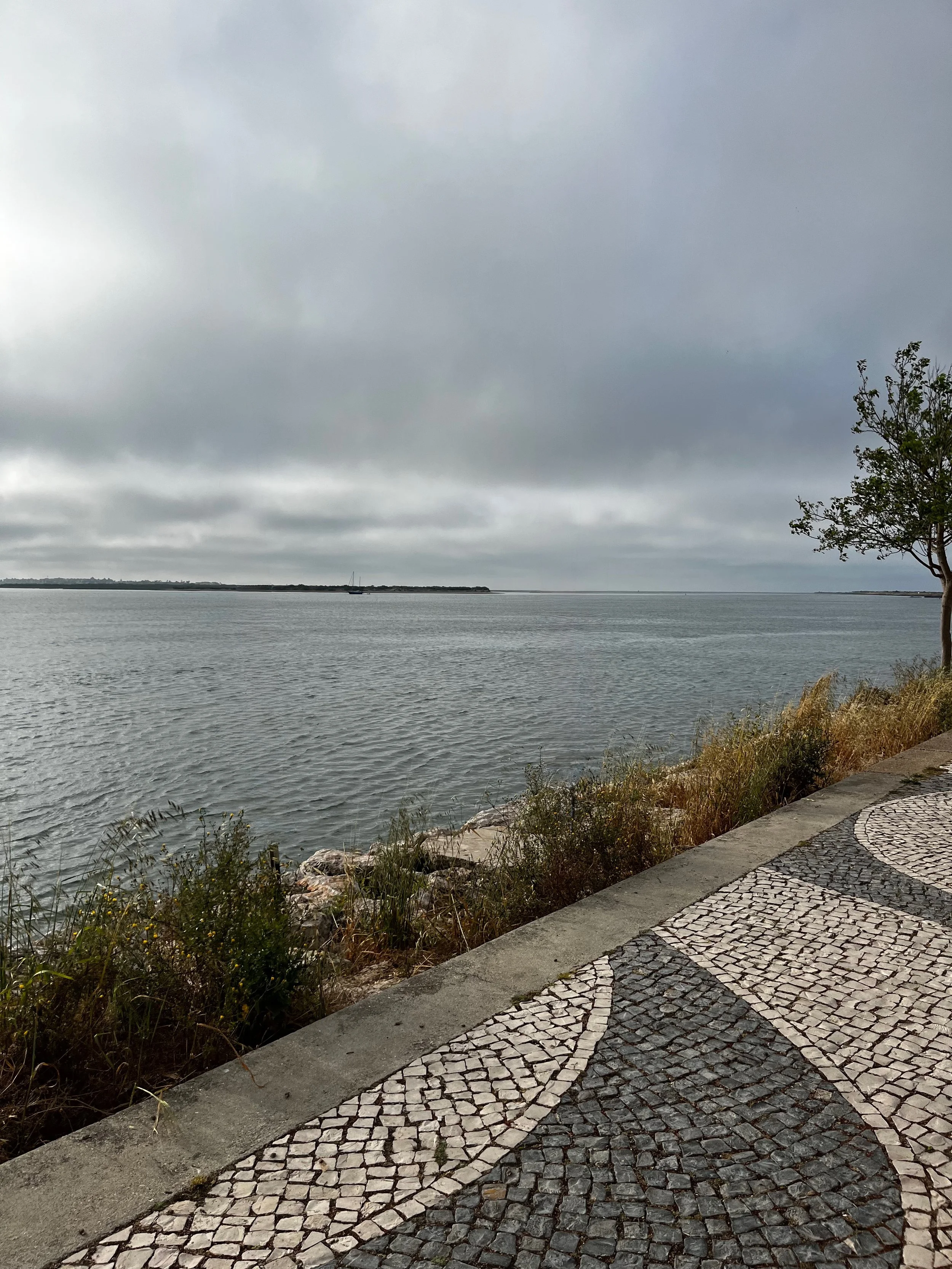
The Guadiana River, Vila Real de Santo Antonio, Portugal Photo by Wendy Stieg

Portuguese doors, Silves, Portugal Photo by Wendy Stieg
Allow Feelings, and Allow Creativity to Start to Sink In
So let’s say it has finally sunk in. Your trip isn’t going to happen. Do you abandon it altogether, rebook it for next year exactly the same way, or consider something else?
Abandoning something meaningful is never easy. I rarely abandon ideas. I try to reframe them. If your trip to the Caribbean didn’t work out, what were you really going for? Sun, sand, rest, exploration, sailing, ocean air? As your mind loosens from the shock of a sudden change, you may begin to see that some parts of what you wanted are still very possible, just in a different form. Sometimes the revised version turns out better than the original.
Retry the Same Plan, Revise,
or Edit?
Breakthroughs rarely happen on the first attempt. Most worthwhile outcomes are refined through revision. The question is not whether your first version worked. The question is what you keep, what you change, and what you release.
At the Just Right Travel Agency, Goldilocks and Mama Bear don’t recommend repeating the same trip plan over and over. They recommend reviewing it like a draft. Some trips need a light revision. Some need a deeper edit. Some are better set aside so a stronger plan can take their place.
This is where the difference between rigid planning and adaptive planning begins to matter. A rigid plan insists on the original version. An adaptive plan asks what still fits and reshapes the rest.
Rigid Planning Versus Adaptive Planning
One helpful way to think about travel planning is to compare rigid planning with adaptive planning. Most of us use a mix of both without realizing it, but knowing which mode you are in can make it easier to revise a trip when conditions change.
Rigid planning treats the first version of a trip like a finished document. Dates, places, and bookings are locked in early, and the goal becomes protecting the original structure at all costs. This can feel secure at first, but when something shifts, the entire plan can feel threatened. The stress often comes not from the change itself, but from how tightly everything was fixed in place.
Adaptive planning treats the first version as a draft. The direction is clear, but the details are adjustable. Instead of asking how to force the plan to work, adaptive planning asks what still fits and what needs to be revised. The purpose of the trip stays steady, while the form is allowed to change.
At the Just Right Travel Agency, Goldilocks and Mama Bear are known for planning in drafts. They start with intention, add structure where it helps, and leave room where life is likely to interfere. When something changes, they do not assume the trip has failed. They open the document, review the purpose, and edit.
When you plan this way, revision is not a setback. It is part of the design.
Mitigation is not about expecting problems
It is about planning with intention. Setting up a dedicated travel savings account used only for travel expenses helps remove pressure and allows you to build and book your trip in stages instead of all at once. Travel insurance is another support layer you should include, not from fear, but because protecting a meaningful investment in your experience is simply good planning. When you combine financial containment, insurance protection, and flexible booking choices, you give yourself room to adapt without panic. It may be helpful to review the order of planning steps, revisit How to Know When You’re Ready to Book a Trip and use it as a reset point so you can move forward again with clarity and structure.
Goldilocks and Mama Bear recently celebrated their first six months of success at the Just Right Travel Agency. They navigated financial instability through creativity, collaboration, and trust in their process, building on what they learned through lived experience rather than perfect conditions. The work supported both of them. Goldilocks found her new digs at last, a small cottage in the woods not too far from the Bears’ home. Papa Bear found a new job, and Baby Bear is still happy to have his own room.
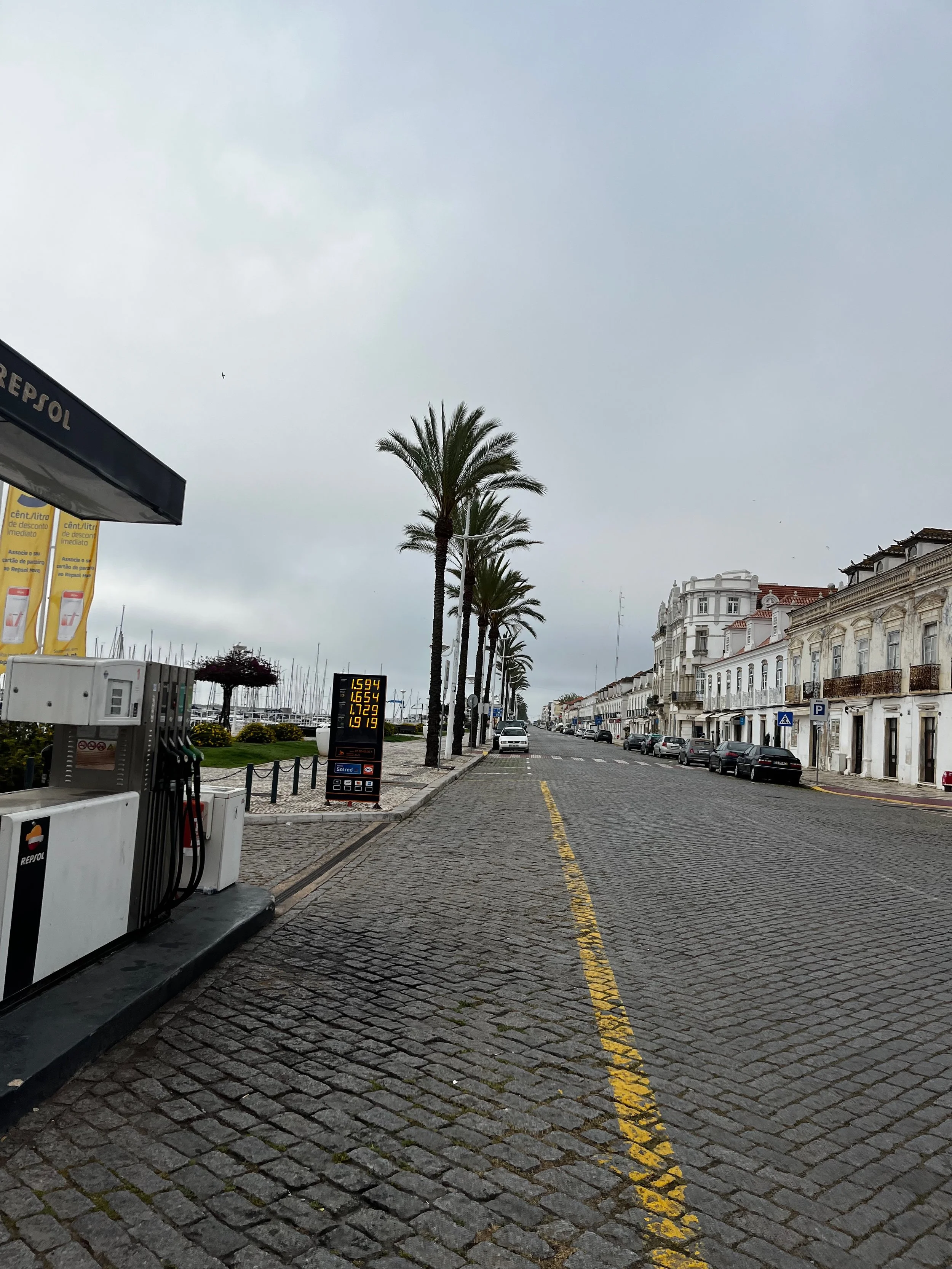
Vila Real de Santo Antonio, Palm-lined street. PHoto by Wendy Stieg

Little-known fact: Goldilocks and Mama Bear went into business together, selling adventure travel.
January’s Blueprint
Ringing in the New Year, Just Right

Planning a New Trip is Exciting
The moment you realize you can start thinking about planning a vacation, trip, or journey is exciting. Sometimes travel arrives through life events like weddings or family gatherings. Other times, it comes from a quieter realization that it is time to give yourself a break and do something you have been wanting to do for a long time. Both carry their own energy and anticipation.
We are standing at the edge of a new year, waiting with that familiar sense of possibility. By recognizing that we are in the doorway between dreaming and doing, just before plans begin to take shape, it is natural to feel the urge to get everything figured out. In January’s Muse, I explored this moment of orientation, the quiet pause before decisions begin. The goal of any trip, though, is not to plan perfectly, but to find what feels just right. That comes more easily with a softened approach, trusting that what you need to know, have, and do will appear as you need it..

Orient Planning Ideas Toward What Feels Right
That first spark of recognizing that a trip is beginning is joyful energy. January carries that same quality. It is a doorway, too, and one you are allowed to stand in for a while. Giving yourself time and space allows your planning to feel grounded instead of rushed. When you balance seeking with allowing, the entire process becomes more steady and calm. January’s momentum is powerful, and it is also okay to slow it down just a little.
What January asks of us is discernment. Creating space for that discernment leaves room for gentle course corrections as plans evolve. Before diving into details, we first orient ourselves toward what feels right.

Goldilocks and the Three Plans
Some of us, myself included, tend to overplan. Others, Paul comes to mind, might lean toward underplanning. The goal here is Goldilocks. Just enough structure to feel supported, and just enough openness for adventure to unfold. Underplan and you can feel unanchored, as if time slips away without meaning. Overplan and everything feels tight and stressful. You know you have it just right when there is space for what matters most and room for what surprises you.
The right plan is not about doing everything. It feels supportive, not impressive. It allows you to stretch your wings in some moments and feel grounded in others. Balance is where the magic lives.
Start with Some Structure
This is where having a planner can help, not as a checklist to complete, but as a place for ideas to live. You do not need to fill everything in at once. The value is in being able to see the whole picture without committing to every detail right away. You can start with the front page and take it one piece at a time. Some people find it helpful to print that page twice, once for brainstorming and once for confirmed bookings as plans come together. When your ideas have a clear place to land, planning feels lighter and more manageable, and it becomes easier to focus on what actually matters.
These Ideas Work in Other Areas of Your Life as Well
You do not need the entire plan in front of you to move forward. What matters most is knowing that the direction feels right. When that foundation is in place, the next steps tend to reveal themselves one at a time. Some details will firm up quickly, others will stay open longer, and that is part of the process. A plan built this way has room to breathe. It supports you without rushing you, and it allows the experience itself to shape what comes next.
There is a voice inside of you. That whispers all day long, 'I feel this is right for me, I know that this is wrong.' ... just listen to the voice that speaks inside.
— Shel Silverstein
If you like having a place to reflect as plans begin to take shape, the Complete Guided Journal Collection offers several ways to notice patterns, clarify direction, and sort ideas without needing everything decided at once.
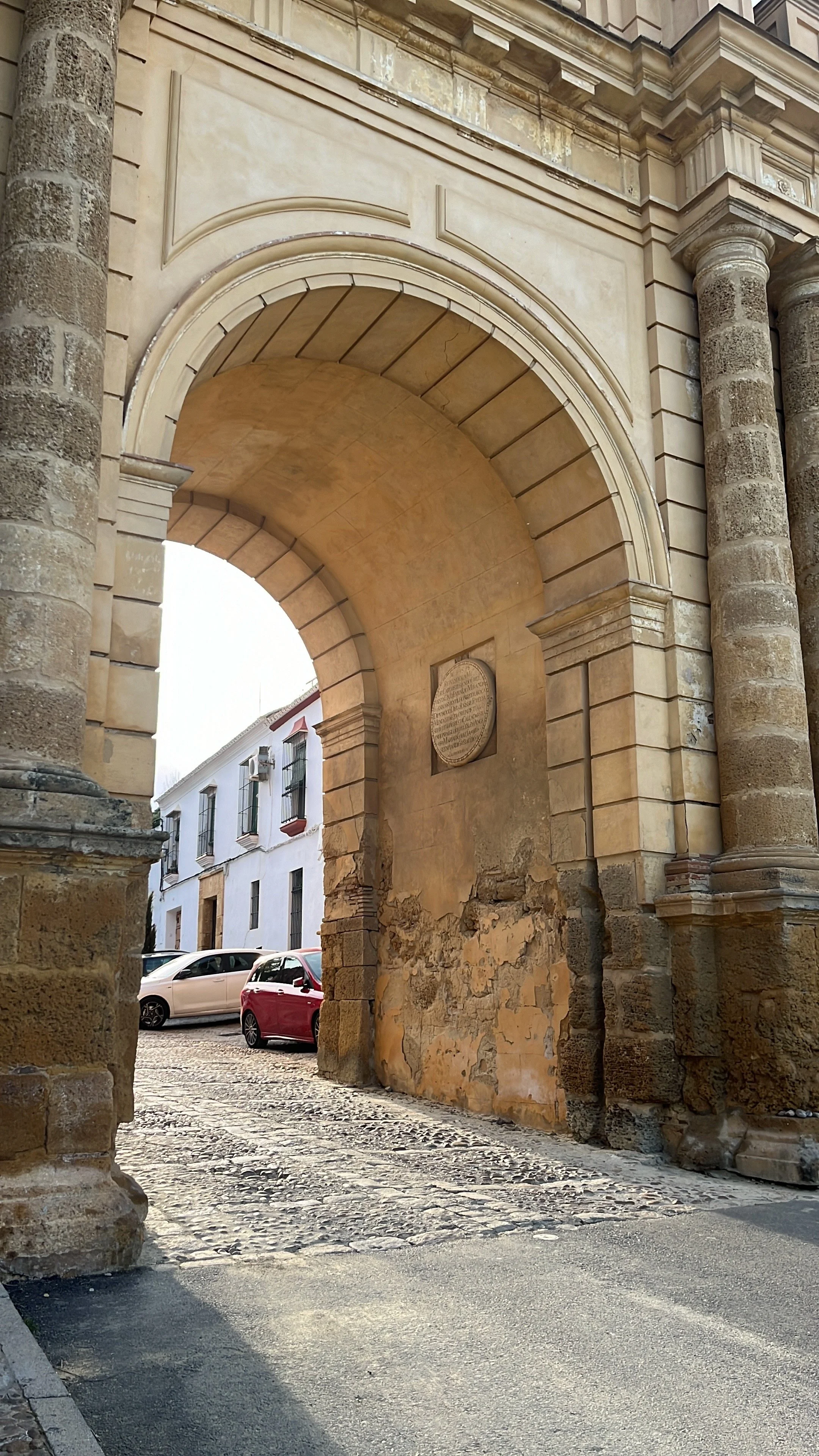
Arched passageway, Andalucía, Spain.
Photo by Wendy Stieg