Meals Series, Part 1: How to Think About Food When Planning a Trip
Meals Are More than Just Sustenance
By nature, I am not much of a planner. My favorite way to travel is to keep a collection of possibilities in front of me and then choose what feels right in the moment. That kind of freedom is especially rich when wandering cities, rural villages, and everything in between. To me, culinary experiences are far more than a way to satisfy hunger; they are a doorway into culture, new flavors, and often unexpected human connection. One afternoon, Paul and I noticed a tiny restaurant perched at the tip of a triangular roadway in a quiet neighborhood, with a few charming café tables outside and a large family gathered inside around a long table, clearly celebrating something together. We never would have found it any other way besides walking. We were on our way back from Belém to our small apartment above the Fado restaurant in Lisbon’s Baixa district, and that unplanned discovery gave us something no reservation ever could.
If you’re more of a write-it-down person, the Meals Estimator is here.
We were tired and thirsty, so we stopped in for a beer. Almost immediately, the family invited us to join them. It looked like a major celebration, but as it turned out, they were simply enjoying a late Sunday afternoon together after church. They were sharing a meal, lingering, laughing, fully present with one another, and they welcomed us into their world without hesitation. I often think that in our version of North American culture, we have drifted away from this. We give up meals together to get back to work. We trade time with the people we love for obligations that rarely deserve the priority we give them. Being invited into something so simple and yet so deeply important gave us pause. It reminded us that what matters most is not urgency or productivity, but being together, sharing food, and allowing community to unfold around a table.
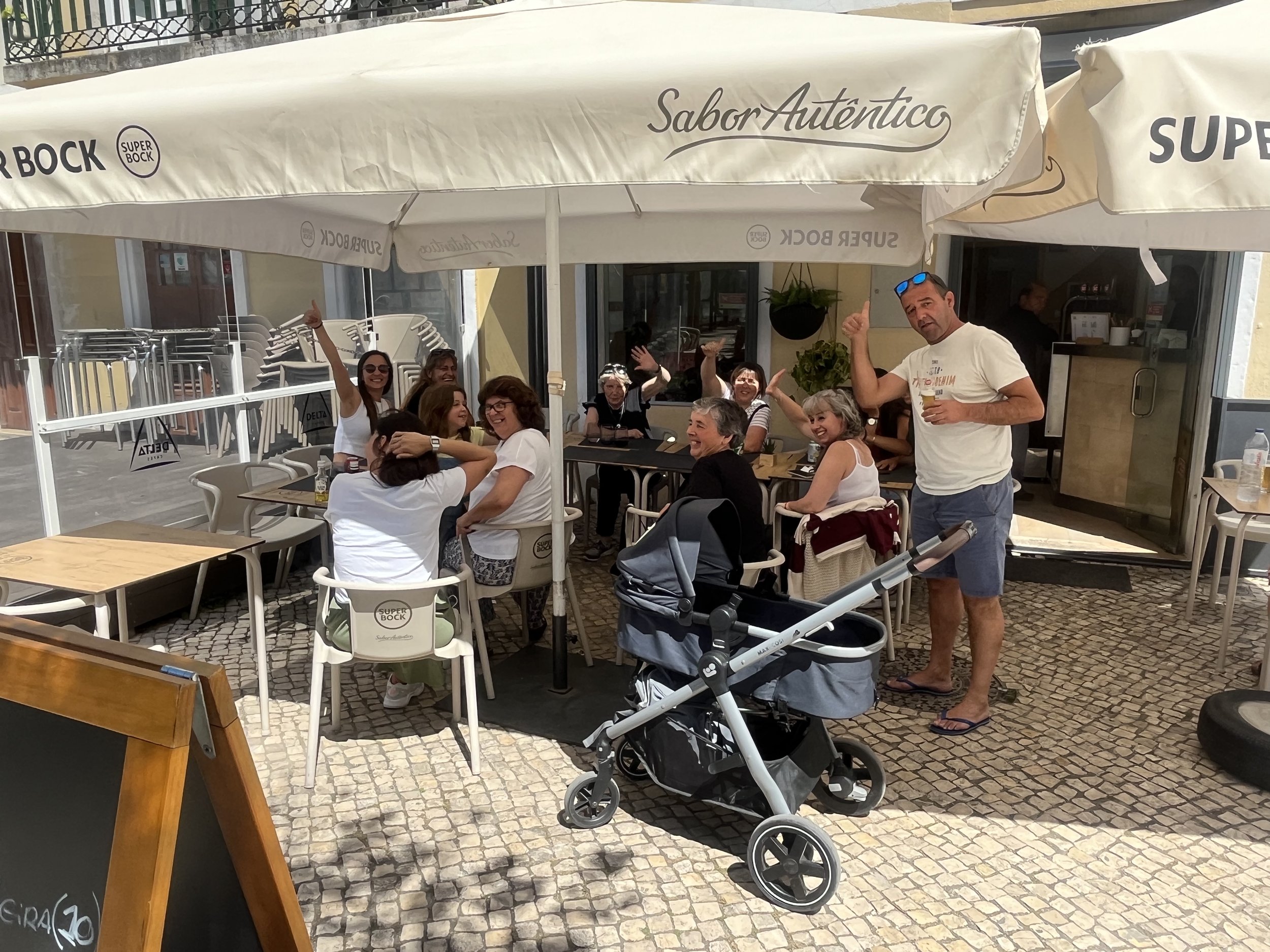
Invited to hang with this Family at Sabor Auténtica, Alcantara, Portugal. Photo by Paul Lampe
After that, I stopped worrying about dinner reservations. I realized that if we were going to truly get a feel for Portugal at its best, I had to stop planning every single detail. That simply leaves more room in the day, and you still get to decide what comes next.
If you’d like more restaurant stories, February’s Experience is a good place to start.
Another glorious experience we have repeated took place in San Francisco. Paul and I were in town to see music, but he insisted that we go to Swan Oyster Depot. We had just gotten off the plane and took an Uber to Polk Street. Apparently Swan Oyster Depot was an Anthony Bourdain favorite, featured on one of his shows highlighting local restaurants. Paul knew about it from our friend Brian, who had once gone some years back. Paul knew the drill: get there early and stand on the sidewalk and wait your turn. There are no reservations, and there are a series of twelve or so stools and an old marble counter. The restaurant has been there since 1912 and is proof that some ways of serving people are better than others and are often very low tech. You cannot Google Swan Oyster Depot and make a reservation. They may not even have a phone. When you sit down at the counter, you notice a sign saying something like, “There is no WiFi! Talk to each other!” There is not even an electronic cash register; there is an old-fashioned one, so bring cash. That is all they take. And be prepared to be wowed by their oysters and Crab Louis Salad. That with an Anchor Steam and you are now right as rain. This place is truly amazing. The two-hour wait did nothing to deter us. We have since been back at least two more times, and every time I am in San Francisco it is one of the first things I will do.
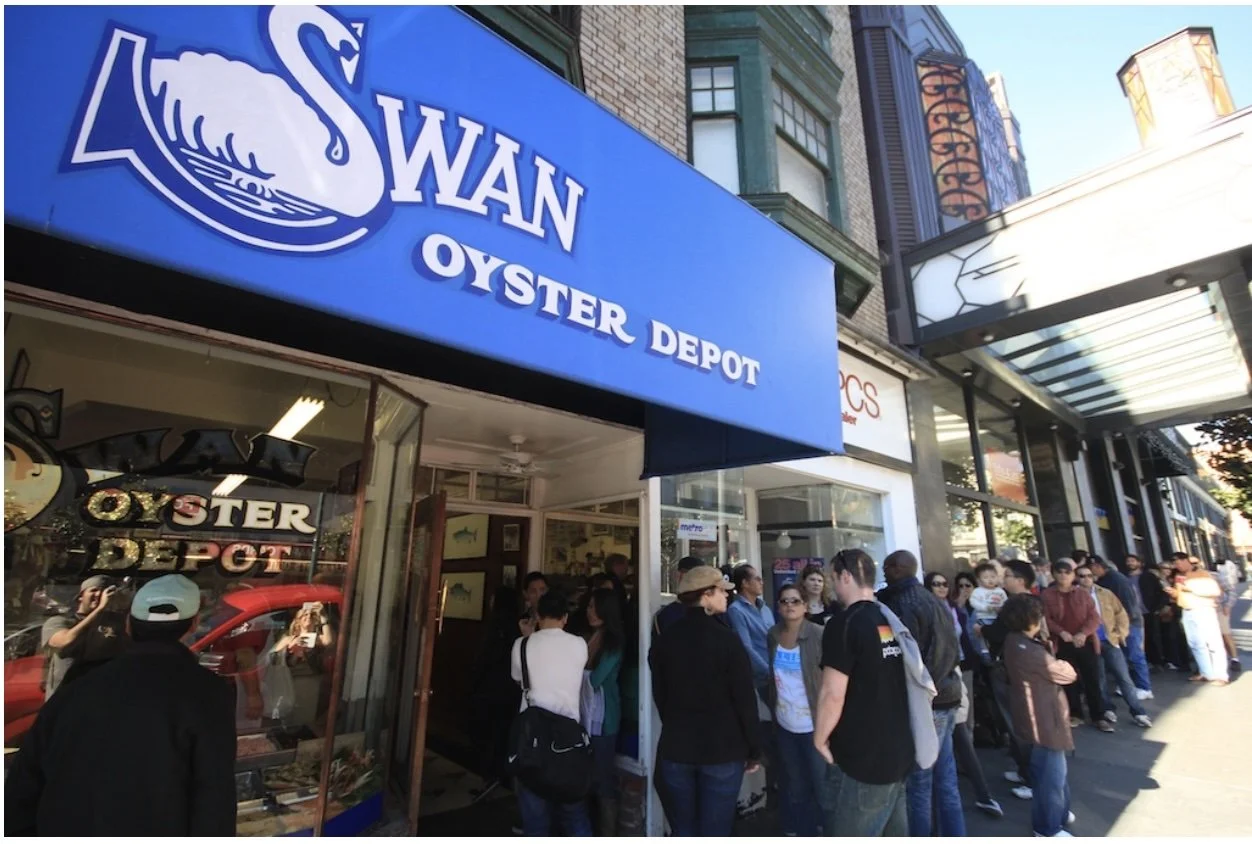
Swan Oyster Depot, San Francisco, CA
Between those two experiences, both during one of our many travels, we have come to realize what kind of dining we like. We love healthy, organic, delicious food that is straight from the farm or the ocean. Spending time enjoying meals is more important than the meal itself. So how do we ensure smooth access to food?
We don’t. We don’t ensure anything. We do our homework up front, but trying to guarantee reservations is less about experience and more about making sure you do not have to think about food. But guaranteeing reservations is not the way I approach incorporating food into a trip. Our approach is different because the kinds of experiences we want are different. We are unapologetic about several things: healthy food, a great atmosphere, and being part of a community. We tend to find places like that and then go back for another visit. That means less searching the second time around, but we are rarely worried about finding somewhere to eat. The way you handle meals on a trip says a lot about what kind of experience you are trying to have.
If you step back and really look at it, most trips include a mix of different kinds of meals. There are meals you design, including the ones you are willing to wait for, plan for, or build a day around. There are meals you anchor, the places you know are worth showing up early for or returning to once you have found them. There are meals you discover by accident, walking past something that feels right and stepping inside. And then some meals simply fuel the day, the grocery store breakfast, the sandwich between museum stops, the snack that keeps you steady until dinner. None of these is better than the others. A trip only feels smooth when it is in balance. Too many designed meals, and the schedule gets tight. Too much wandering can lead to unnecessary friction. The goal is not control. It is rhythm. When you understand what kind of meal you are having, you move through a place differently. You leave room for real experience.
Our roadmap to finding great daily meal spots starts with understanding the area before traveling there. We research neighborhoods. We pay attention to meal timing and when people actually eat. Europeans, for example, dine much later than North Americans, and knowing that helps you decide whether to make reservations, whether you want a Michelin-starred experience or a relaxed neighborhood table. We usually identify two or three local favorites and are prepared to wait. That patience often pays off.
One evening, we were waiting outside Jacques-Imo’s on Oak Street, a few doors down from the famous Maple Leaf bar in the Leonidas neighborhood. We were enjoying cocktails on the sidewalk, because New Orleans! As we stood there, a truck with a trailer was parked across the street with a giant grill blazing and oysters sizzling over the fire. So while waiting for dinner, we had some of the best grilled oysters we have ever tasted. When we were finally seated, we noticed Jacques-Imo’s was serving those very same oysters, fresh from the Gulf of Mexico. It turns out our culinary adventure definitely paid off.
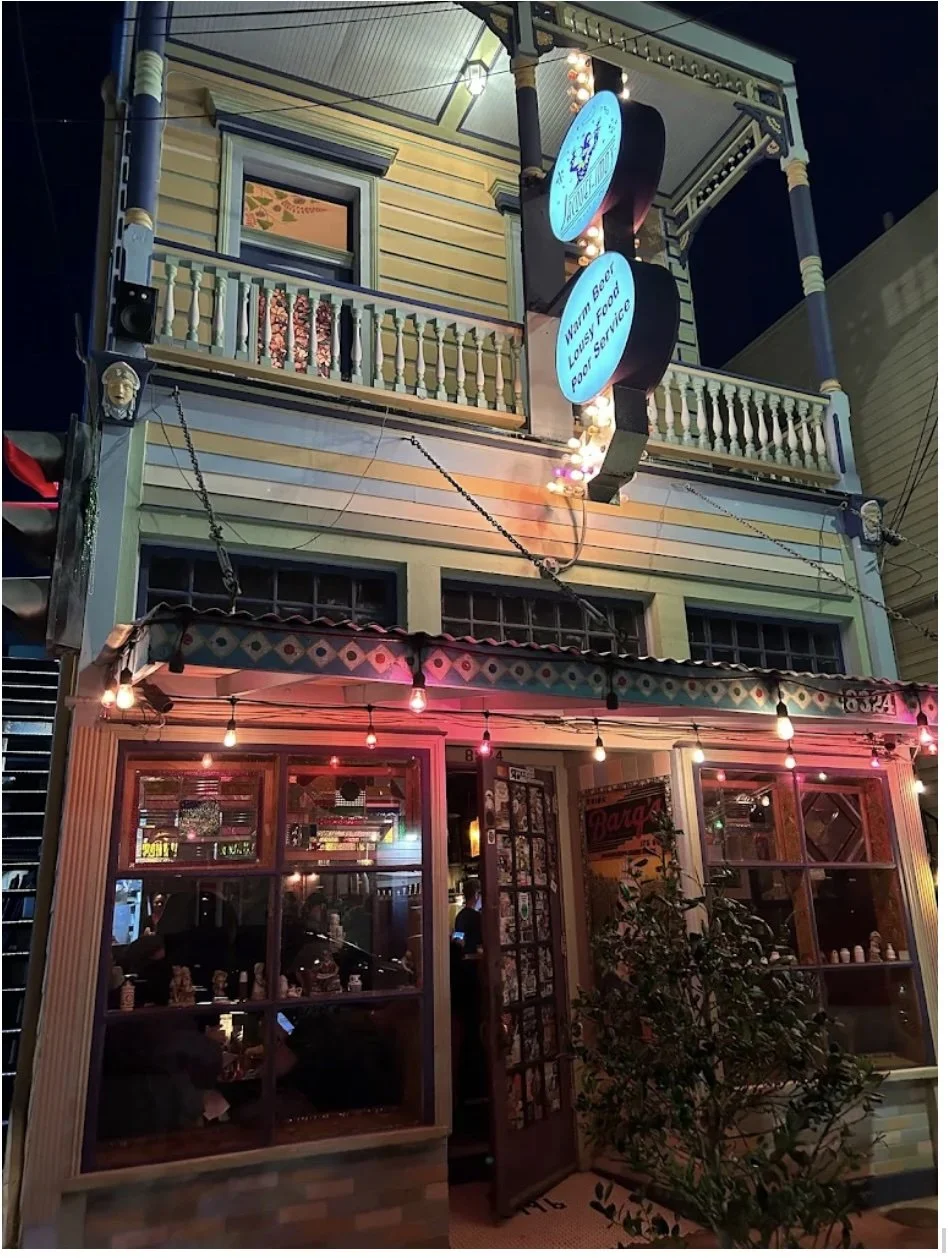
Jacques-Imo’s Restaurant, Leonidas District in New Orleans, LA
Meals are never just about food. They shape the rhythm of a trip, the pace of a day, and sometimes the memory that stays long after you return home. The way you approach them reflects what kind of experience you are trying to have. You can schedule every bite, you can wander without a plan, or you can find a balance that feels like your own. For us, that balance means understanding a place before we arrive, staying open once we are there, and trusting that the right tables tend to appear when we are paying attention. Some meals are worth waiting for. Some are worth planning around. Some simply keep you steady until the next adventure. All of them play a role.
This article is about orientation. It is about thinking differently before you book the reservation or step into the café. In the next piece, I will get into the practical side: how to decide when to reserve, when to wander, how to use markets and neighborhoods strategically, and how to avoid unnecessary friction. But it starts here, with how you want to move through a place.
This month’s theme is orientation. The Muse and Blueprint articles continue that conversation.