
How to Evaluate Safety When Planning a Trip
How are we supposed to know who to trust in terms of information?
Where do we go for the majority of our information? It is so easy to have your emotional mind become hijacked by sensational news headlines, inappropriately handled information, and generally one-sided journalism designed to do anything but give us the truth. This matters when you start planning travel, it matters just before you travel, and it matters while you are traveling. The very best thing you can do is figure out the best resources for yourself. Even the search engines you trust can have a political sway. So what are we to do if what we seek is the actual reality of what is going on?
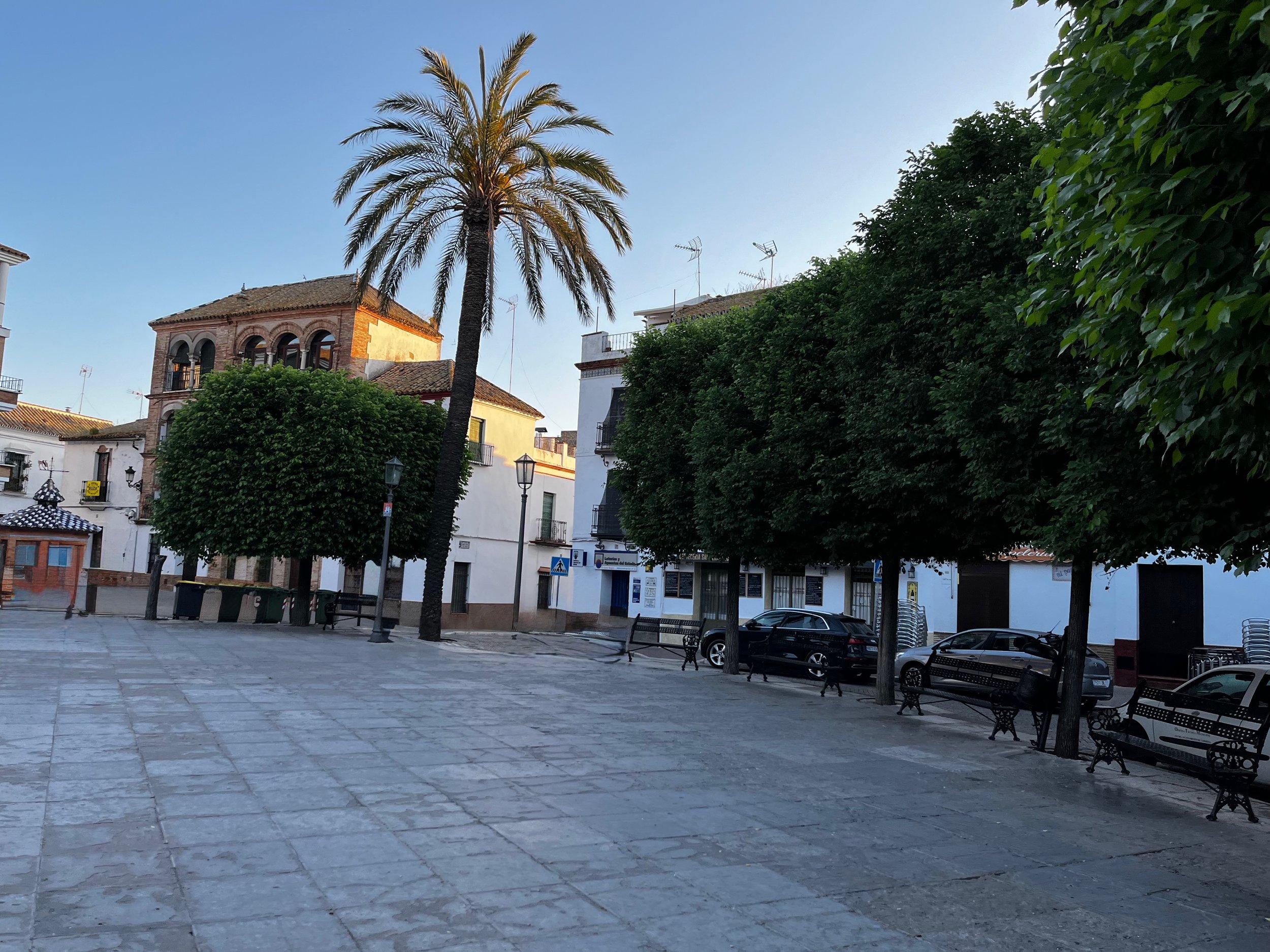
Carmona at sunrise. Photo by Wendy Stieg
I think we are probably all guilty of getting sucked into sensational and inaccurate news about events that do impact us directly. This article gives you a way to think through your decisions, and also encourages you to be aware of situations before making a judgment about them. The intent is not to alarm, and it is not to dismiss fear. Very real, scary things happen every day, and especially lately. Many people feel uneasy, worry about political instability, and have distrust of typical information sources. The fear is real, but perhaps some of the alarm is exaggerated in some situations. We as discerning readers have to be able to figure out what is alarm from sensationalism, and what is real, so we can make accurate travel decisions. The aim of this article is to orient the traveler so they know where to go for information, and to be able to corroborate that information from multiple sources. If you are still at the very beginning of planning and trying to get oriented at all, How to Plan a Trip When You Don’t Know Where to Start offers a complementary way to think about that first step.
How Fear Shapes Perception
Our brains are pretty amazing. They do many things for us at the same time, and it helps to understand ourselves from an observational perspective. Older brain systems, like our emotional brain, are designed to keep us safe and alive. This is where fight or flight lives. We use it constantly, even for simple things like crossing a street. A loud horn can startle us back onto the sidewalk before we’ve had time to think. That system works. Our thinking mind is also remarkable. It allows us to slow down, reason, and make sense of what’s actually happening. Knowing what we consume in terms of information, and being aware of how that information affects our brains, matters. I explore this idea of internal orientation more fully in January’s Muse: Staying Oriented in a Noisy World.
We know that checking multiple sources and corroborating fact-based information is the best approach. And yet, how easy is it to read a scary headline and immediately feel anxious? Very easy. So easy that our emotional brain doesn’t always know the difference between something we should be afraid of, like an oncoming car, and something that is only potential, speculative, or not grounded in fact. One common tactic in sensational journalism is to talk about possible future events as if they are already happening, or to paint a frightening picture of the world that only one viewpoint can solve. That kind of reporting is designed to grab attention and generate clicks. We don’t have time or emotional energy for that. This article is about learning the difference between being informed and being flooded, and about offering practical ways to ground yourself and find reliable information when events arise that could impact travel.

Sintra fountain. Photo by Wendy Stieg
Risk, Uncertainty, and Discernment
Something I know to be true about myself, and also true about most travelers, is that we are generally risk takers. We enjoy just enough uncertainty to keep things fresh and alive, but we also want to mitigate risks that could derail a trip. A boring, perfectly predictable experience is not what most travelers are looking for, even though we do expect our trips to be reasonably safe. The risks involved in traveling are real, and this isn’t about dismissing concern or even mild fear about the unknown. A little fear or uncertainty is normal for our emotional brains, and anyone who has traveled knows that uncertainty is part of the experience. Leaving our comfort zone is the point. The goal isn’t eliminating risk, but understanding scale, likelihood, and context, and approaching travel this way helps us make logical, grounded decisions based on what is actually happening rather than what we fear might happen.
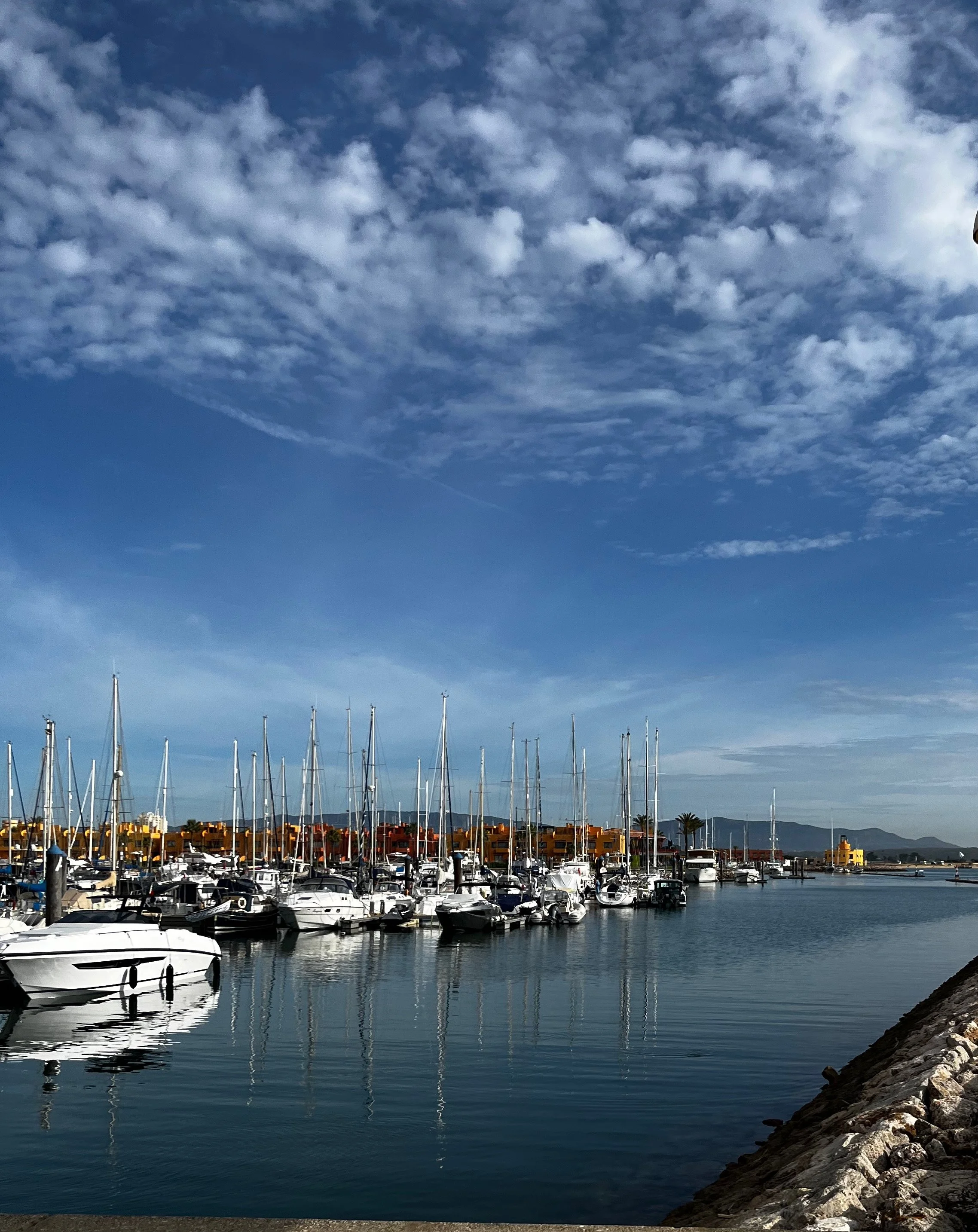
Boats at sunrise, Portimão. Photo by Wendy Stieg
When I’m assessing travel conditions, I start with official, factual sources like Travel.State.gov, the STEP program, and the CDC’s Traveler Health pages. These resources provide baseline information about entry requirements, health concerns, and known risks, and they’re designed to prioritize public safety. Official sources tend to err on the side of caution, which makes sense for their role. At the same time, no single source should be used in isolation. I read the details behind advisories, pay attention to what the guidance is actually addressing, and then corroborate that information with additional sources and on-the-ground signals. Moment to moment, the most reliable approach is not certainty, but cross-checking, context, and staying attentive as conditions evolve.
In addition to official guidance, I look for pattern-based travel information, long-standing guidebooks, and reporting that focuses on facts rather than speculation. No single source tells the whole story, but when multiple, independent sources point in the same direction, it becomes easier to stay oriented. Well-established travel guides like Lonely Planet, Rick Steves’ Europe, and Rough Guides are especially useful because they focus on neighborhoods, transportation, customs, and logistics rather than breaking news. Their strength is context. They help answer practical questions about what daily life looks like and whether places are operating normally. Over time, these kinds of resources provide a steady, on-the-ground perspective that can counterbalance more sensational narratives.
I also pay attention to broader patterns and signals that show how a destination is functioning in real time. High-volume traveler platforms like TripAdvisor, used carefully, can reveal consistent themes when you look past extreme reviews and focus on repetition. Travel communities, such as r/travel, often self-correct exaggeration and can offer current, experience-based insight when read as a whole rather than as individual anecdotes. Infrastructure signals matter too. Active tours on platforms like Viator or GetYourGuide, along with published schedules on national rail and transit sites, are strong indicators that tourism and daily life are continuing as usual. When I do look at the news for context, I rely on more centrist, fact-focused outlets like Associated Press, Reuters, or, selectively, BBC World Service, not as final answers, but as one more way to corroborate what other sources are showing. The goal is never blind trust, but informed orientation.
The Hardest Part of the Dance: Using Official Guidance Wisely
One of the harder parts of navigating travel information is understanding how to use official guidance wisely. Some people feel that government advisories can reflect an abundance of caution, diplomatic considerations, or the need to prepare for worst-case scenarios rather than describe everyday conditions on the ground. That perception exists, and it’s understandable. Official sources are designed to prioritize public safety across many possible situations, which means they often take a conservative approach by default. For that reason, I treat official guidance as a starting point, not a conclusion. I read the details carefully, pay attention to what the guidance is actually addressing, and then place it alongside other independent sources and real-world signals. Discernment doesn’t come from certainty, but from context, comparison, and corroboration.
Reflections, Portimão. Photo by Wendy Stieg
Corroboration Restores Agency
Corroboration is what keeps us from spiraling. It means reading the details behind advisories rather than focusing only on levels, understanding what a warning is actually addressing, and paying attention to whether daily life and infrastructure are functioning normally. It also means looking for patterns across multiple, independent sources rather than reacting to extreme anecdotes or isolated headlines. Moment to moment, all we can really do is corroborate across sources, place information in context, and stay attentive as conditions evolve. This approach restores agency. Conditions change, advisories update, and decisions are always time-bound. Right now, travel is still possible when approached with discernment and care, knowing that people get to decide what safety means for them and that clarity, not certainty, is what allows us to move forward without being driven by fear.
Serra de Sintra, koi pond. Photo by Wendy Stieg
Living Well Without Certainty
Last April, I traveled to Portugal solo, and in the weeks leading up to the trip I read countless articles describing how scary travel had become, how Europe was banning tourists, and how unwelcome we should expect to feel. I found myself worrying needlessly about far too many things before I ever left. As it turned out, people were kind, helpful, and genuinely happy to talk with me. Some even asked if I was German. I was able to use my newly learned conversational Portuguese, which helped people feel more at ease and made my experience even richer. What I encountered on the ground did not mirror a single alarmist article I had read beforehand. Does that mean everything is fine everywhere, or that there is no danger at all? Of course not. However, it does mean that lived experience matters, as does our ability to engage politely, remain aware, and adapt as we navigate the world. It also reinforced the idea that a more discerning approach to the news leads to a more accurate understanding of travel. You don’t need certainty to live well. In fact, where in life do we ever get perfect certainty? Travel teaches us to accept that reality. I explore this idea of orientation without certainty more fully in January’s Experience: Holding Presence While the Future Unfolds. What we need instead is proportion, context, and updated information. Wanderlust can, and does, coexist with wisdom, caution, and presence.
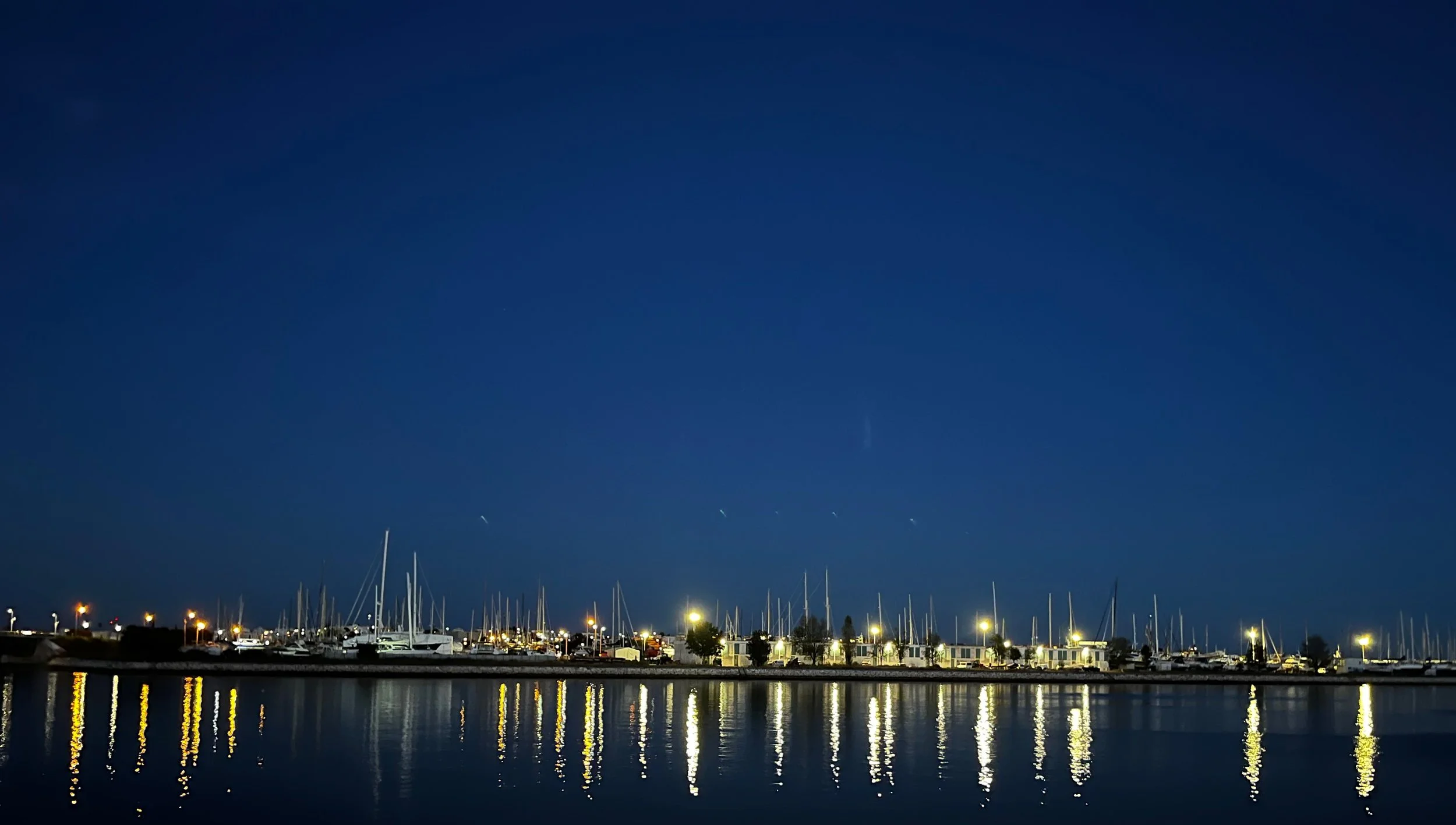
Portimão just after dusk. Photo by Wendy Stieg
