
Have You Considered Spain…for Retirement?
EUROPEAN RETIREMENT SERIES
Finding the Right Fit
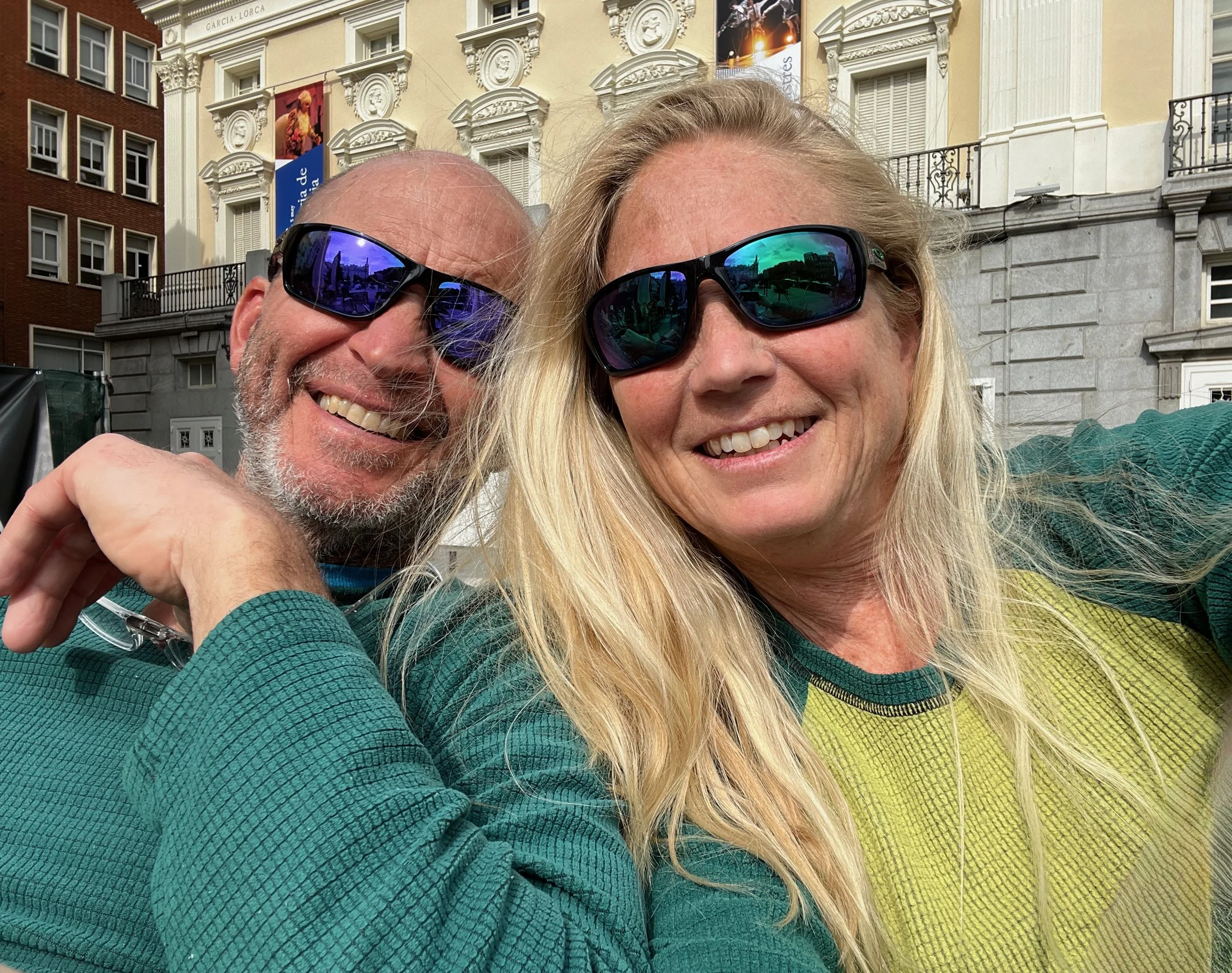
Madrid clearly puts us in a great mood! Photo by Wendy Stieg
What about Spain could make you want to retire there?
I was the world’s worst procrastinator. That sounds surprising, given that I was a classroom teacher and that I tend to be overly organized. But one year, while still in college, I somehow managed to write nine term papers in one night. There is nothing good about this! I admit that this is nothing to brag about, and that I have since changed my ways, sort of. But in many ways, when I think about retirement, I get that old stress response, like waiting until the last minute to study for a final exam. I think many people shy away from thinking about retirement, but now is not the time to procrastinate.
I also have lived a life filled with wonder, joy, and incredible moments, as well as huge challenges, financial and otherwise. I am certain I am not the only one in that boat. One thing is for sure. We are not ready. We have plans, though, and are actively working on them. We already know that we need to find a creative way to afford to retire. I don’t have time to argue about whether it was circumstances outside of me or decisions I made, or both. I have to figure something out, and soon. Thus, Best of Both Worlds was born. I love this quote: "Desperation is a necessary ingredient to learning anything, or creating anything. Period. If you ain't desperate at some point, you ain't interesting." –Jim Carrey. I know Jim Carrey went through homelessness and other challenges in his life. He does have an amazing positive attitude and has become quite successful. I think there’s something to that.
Spain has been in this conversation. I have always felt drawn to the Iberian Peninsula. I love the culture, the language, the customs, the style. I love it all, and for whatever reason, feel at home there. So far in this series, we have discussed France as a possible option for retirement. I love a lot about France too, and could easily see myself there. Something both France and Spain have in common is this idea that working every single day for ten hours a day, is just not what they do. If you are looking back on your life and realizing all you did was work, it’s time to think again. While working until you die might make your employer happy, what did it do for you? Neither France nor Spain approaches life this way. There is nothing wrong with hard work, but life needs to be balanced. It took me this long to fully realize what this means, so exploring this part of the world for retirement makes sense.
Why Spain?
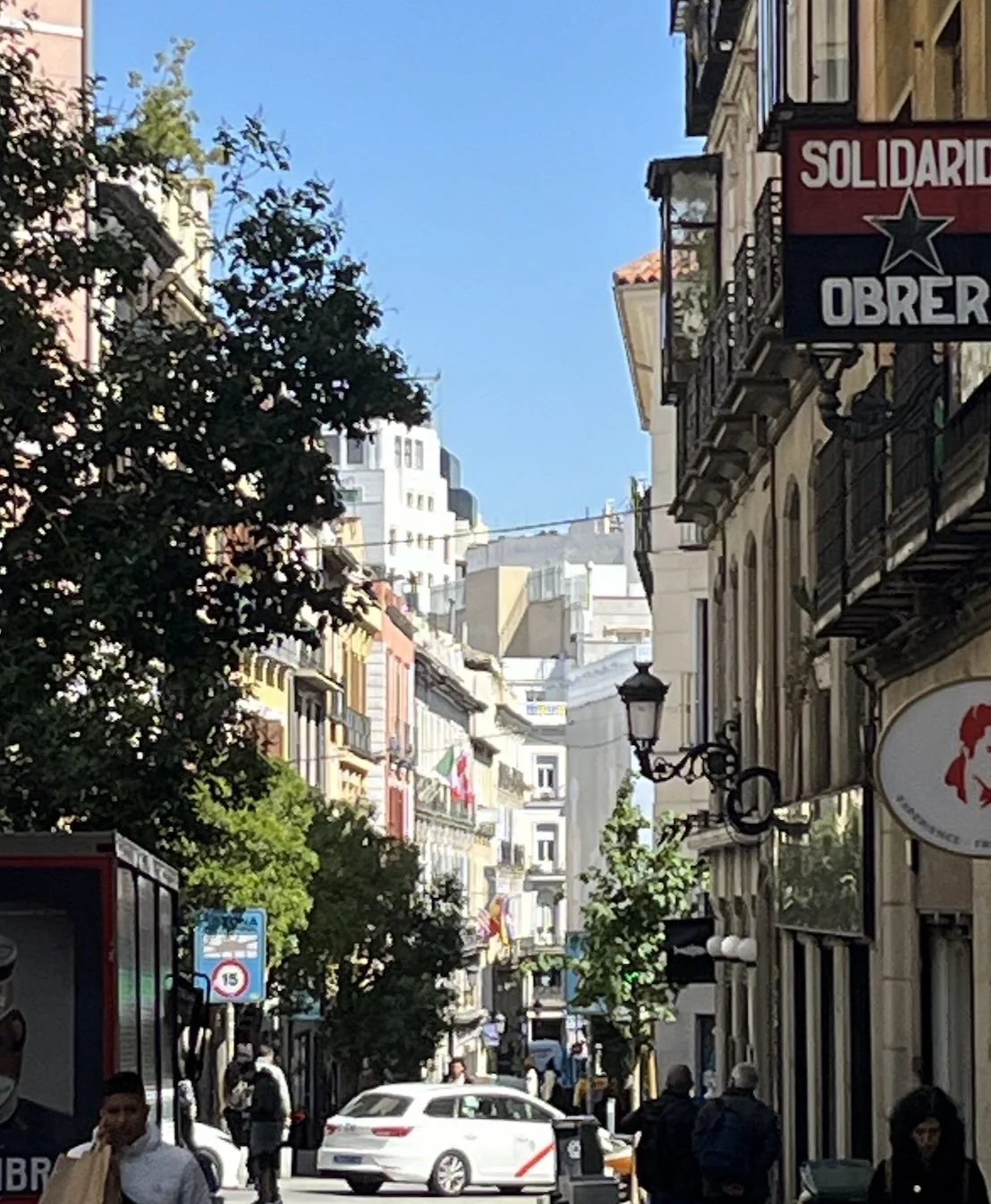
Madrid, business as usual. Photo by Paul Lampe
Life in Spain is about community. There is a strong sense of place in villages and cities where people live in the streets. That means they spend time in the village squares, in cafes, and bars. Tapas culture is a big deal. This is very different from living in the United States. There are a lot of great things about living in the United States, but society has become very fragmented, and there is very little outdoor connection. I am intrigued by the idea of finding community right where you live. I am also really interested in living the Mediterranean lifestyle. I love the idea of outdoor cafés, walking culture, festivals, and historic sites. I love the idea of long lunches, late dinners and real regional diversity. The setting is incredible too. Having access to mountains, coastline and really great forms of transportation is exciting. I love the idea that you really don’t need a car in Spain.
The Next There explores how I stopped chasing the next job and started building the next phase of life.
Which Areas Are We Interested In?
One area I hadn't thought much about before, and one I definitely want to visit, is Green Spain. Asturias and the Basque Country offer mountains, a cooler climate, rugged coastlines, lush landscapes, and incredible cultural diversity. Castilian Spanish is spoken throughout the region, but the Basque Country is also home to Euskara, one of Europe's oldest languages. It feels like a completely different side of Spain than most people imagine, and I love the idea of exploring a greener, quieter part of the country.
Andalucía is known for sunshine, history, flamenco, and the Mediterranean lifestyle. Inland cities like Granada and Sevilla offer incredible Spanish culture. Granada, with the magnificent Alhambra, reflects centuries of Moorish history, while Sevilla is the heart of flamenco, vibrant festivals, and traditional Andalusian culture. Along the coast, Málaga offers a lively waterfront and world-class museums, Marbella is known for its beaches and sophisticated resort lifestyle, and Cádiz charms visitors with its ancient history, walkable old town, and Atlantic coastline. Castilian Spanish is spoken throughout Andalucía, although the Andalusian accent is known for being quite distinctive. Like any regional dialect, I imagine that spending time there and becoming part of the community would naturally help you understand it.
Another area that really interests us is Catalonia, home to Tarragona, Barcelona, and Girona. This region combines Mediterranean beaches, vibrant cities, charming medieval towns, and easy access to both the Pyrenees and southern France. Castilian Spanish is widely spoken, but Catalan is also an official language and an important part of the region's identity. I think making the effort to learn at least some Catalan would be one way of showing respect for the people and culture if we ever chose to live there.
Green Spain, Andalucía, and Catalonia represent three completely different faces of Spain. That diversity is one of the things that makes Spain so intriguing. Rather than asking whether we want to retire in Spain, we're really asking which part of Spain feels most like home.
Daily Life
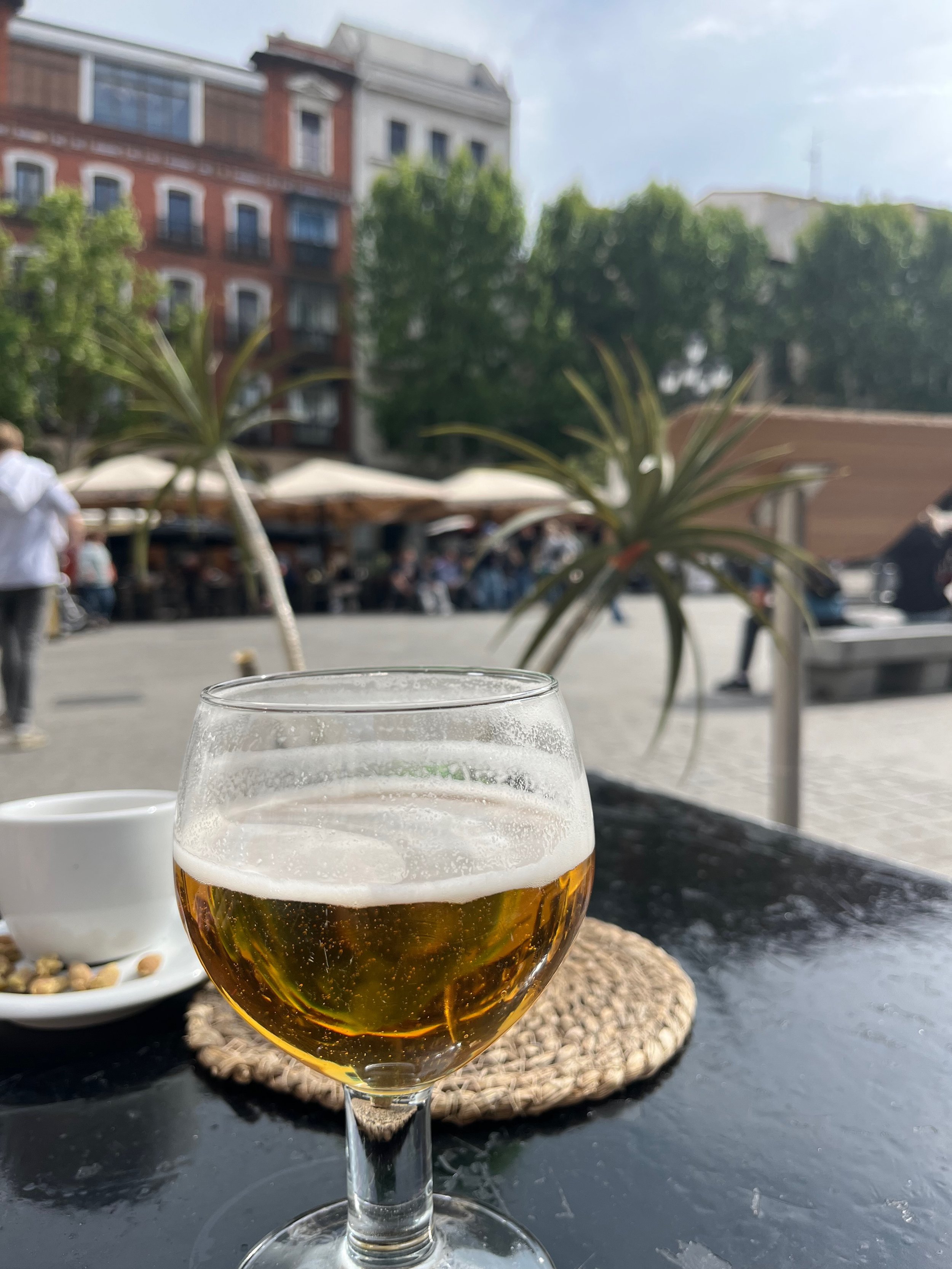
Long, slow lunches in Madrid Plaza. Photo by Wendy Stieg
I know we are going to have to supplement our retirement income. One thing I believe, and not just philosophically, is that retiring does not mean getting ready to die. It means changing how you live, how you earn income, and what you choose to do with your life. You are no less important because you work differently or no longer have the same job title.
The idea that you would spend your career with one company, remain loyal to each other, and leave with a pension and a gold pocket watch is largely gone. Retirement means something very different from what many of us were told at the beginning of our careers. I can spend my time being angry about that, or I can focus on the choices I still have.
I choose to take the positive approach. I may not have control over the larger systems or the decisions made by the powers that be, but I do have control over my thinking, my choices, and the way we build the next part of our lives. I write a blog, provide marketing services for small businesses, and am actively pursuing part-time work. I do not expect to stop working completely. I want to work differently, with more freedom, purpose, and balance.
Beyond the scenery and culture, Spain also offers many of the practical things we are looking for as we think about retirement. Access to excellent healthcare, fresh food found in neighborhood markets, walkable communities, and reliable public transportation all contribute to a lifestyle that encourages people to spend more time outdoors and less time in their cars. Of course, the cost of living varies depending on the region, just as the climate ranges from the lush Atlantic coast of Green Spain to the warm Mediterranean shores of Andalucía and Catalonia. Rather than simply looking for a beautiful place to retire, we're looking for a place where everyday life feels healthier, more connected, and more intentional.
What Booking Luxury Travel Taught Me About Intentional Travel explores why meaningful travel is about experiencing a place rather than simply checking destinations off a list.
Retiring in Spain FAQs
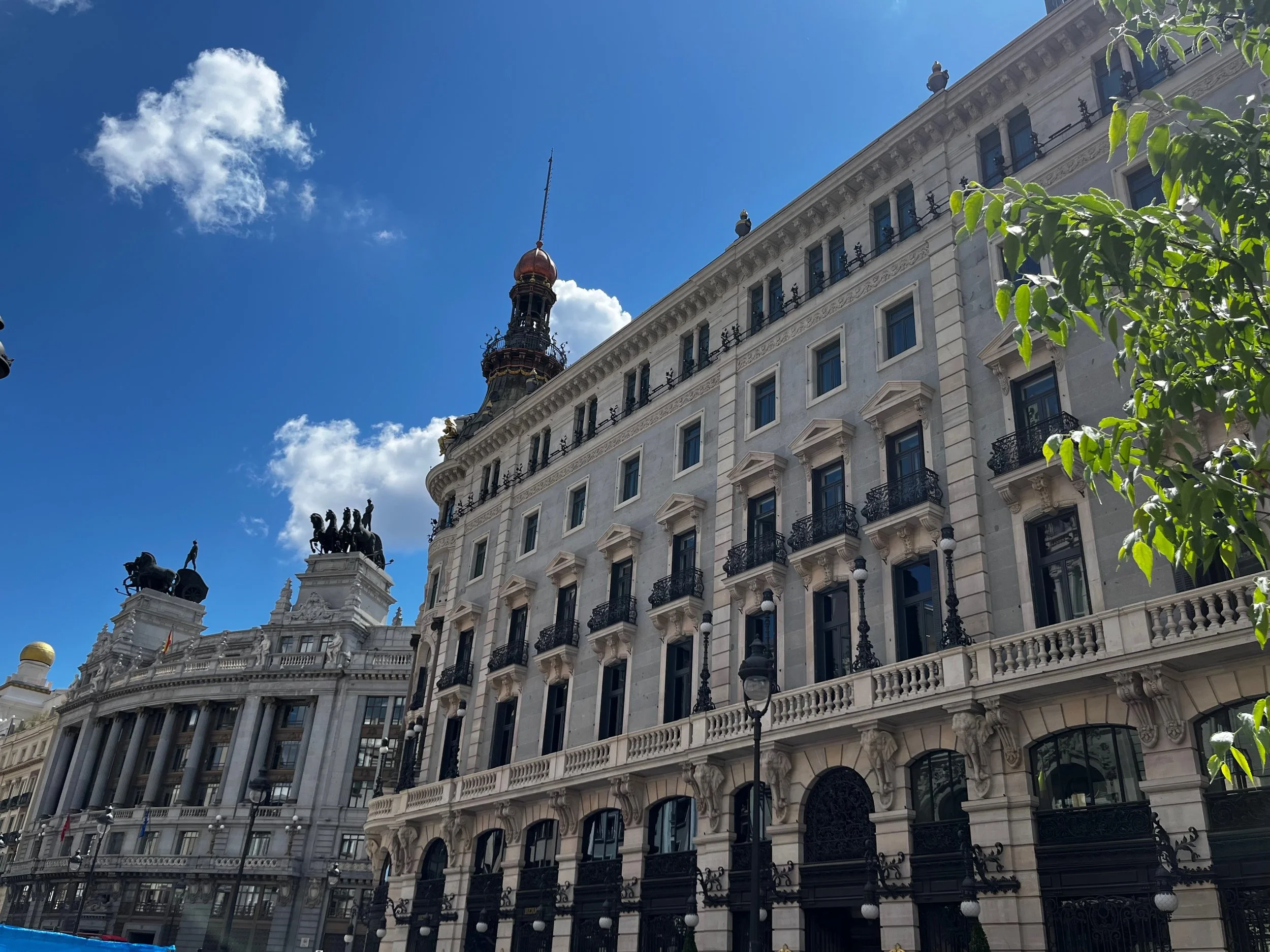
An ordinary day with extraordinary architecture in Madrid. Photo by Wendy Stieg
Can Americans Retire in Spain?
Yes. Americans can definitely retire in Spain. But there are restrictions, and you do have to demonstrate sufficient financial resources. You can apply for the appropriate long-term visa, which is necessary if you plan to stay for longer than 90 days. Remember you can stay up to 90 days within any rolling 180-day period in the Schengen Area without a long-stay visa.
Is There a Retirement Visa?
Not exactly. Spain does not have a visa officially called a "retirement visa."
Which Visa Might Apply to You?
Traditional Retiree – The Non-Lucrative Visa (NLV) is the most common choice. It allows you to live in Spain if you can demonstrate sufficient financial resources and private health insurance, but it does not permit you to work, including remote work.
Digital Nomad – If you plan to continue working remotely for clients or an employer outside Spain, the Digital Nomad (Telework) Visa may be a better fit. It was specifically created for people earning their income remotely while living in Spain.
Business Owner or Entrepreneur – Spain has visa and residence pathways for people starting or operating businesses, although the requirements depend on the type of business and investment.
Investor – Spain's Golden Visa program was abolished in April 2025, so purchasing property is no longer a pathway to residency through that program. Investors now generally need to qualify through another residence category, such as the Non-Lucrative Visa, Digital Nomad Visa, or an entrepreneur route, depending on their circumstances.
We'll take a much deeper look at each of these options in a future article on retirement visas in Europe, but understanding which category best describes your situation is a great place to start.
How Much Income Do You Need?
Unlike France, Spain does publish minimum financial requirements for retirees. These are based on the country's IPREM (Indicador Público de Renta de Efectos Múltiples), which is updated periodically. As a general guideline, a retired couple should expect to demonstrate approximately €36,000 per year in reliable retirement income or qualifying financial resources. The exact amount changes as the IPREM is updated, so it's always important to verify the current requirements before submitting your application.
Is It Difficult?
I would say Spain is moderately difficult in terms of overall retirement. Spain may be somewhat easier than France for retirees, however, because it lays out the requirements more clearly, has a generally lower cost of living, and offers affordable housing in many parts of the country. Prices and rental availability can be challenging in the best-known cities and coastal destinations, but retirees who are willing to explore less famous, equally appealing communities may still find affordable places to rent or buy. The biggest challenge is usually gathering the required paperwork and documentation before leaving the United States, not unlike France. Keep in mind that many retirees complete the process successfully every year.
Where Does Wanderlust Even Come From?is the story of how a lifelong curiosity about the world eventually became a search for where we might someday call home.
Is Spain Right for You?

Piedra Boutique, Madrid. Photo by Wendy Stieg
This question really depends on your personal preferences. France is known for gastronomy, fine wines, Parisian fashion, and that je ne sais quoi: that hard-to-define, uniquely French feel. Spain is no slouch in the food and wine department either, and spend a day strolling around Madrid and you will see people in fashionable clothing as well. As Americans, we may not really notice but we really could step it up a notch! Casual America, this is not! But they are just different culturally, and the better choice comes down to which atmosphere, pace of life, and way of living feels more like home to you.
If you enjoy walking, love Mediterranean food and lifestyle, want sunshine, and appreciate history, Andalucía and Catalonia may be for you. Food, lifestyle, history, and outdoor cafés will all have that Spanish feel, but Green Spain has a lot more rain in the winter. If you find yourself drawn to a slower pace of life, outdoor cafés, walkable communities, incredible food, rich history, and the idea of spending more time living than driving, Spain may deserve a place on your retirement short list.
We will look into Portugal in our next installment, further refining similarities and differences, so you can consider visiting or maybe even moving to one of these amazing countries.
Conclusion
You have heard me talk about Portugal, and I still consider it to be a possibility. But as mentioned previously, we were unable to qualify for the house we had a down payment on, and had to take a few steps back in evaluating what might be right for us. We don’t yet know if this is going to happen, but we are back to discussing a trip to Spain at the end of August. We are not even to the messy middle in this but will have to get going soon on travel plans as we are fast moving to the end of July.
Stay tuned as we get ready to decide on our next travel plans. Our dream is to visit during La Vuelta, the famous bicycle race. We would love to do a scouting trip combined with chasing some of the bike stages. Keep your eyes open to the Best of Both Worlds as we ready ourselves for our next trip. Seeing a small part of France, as well as Catalonia, Valencia, and Andalucía, is in the plan.
